Acoustic Environment Variations and Their Correlation with Miscommunication Incidents in Fast-Paced Team Interactions Across Stadium Settings
Written by Rosa Klein · Jul 15, 2026
Acoustic Environment Variations and Their Correlation with Miscommunication Incidents in Fast-Paced Team Interactions Across Stadium Settings
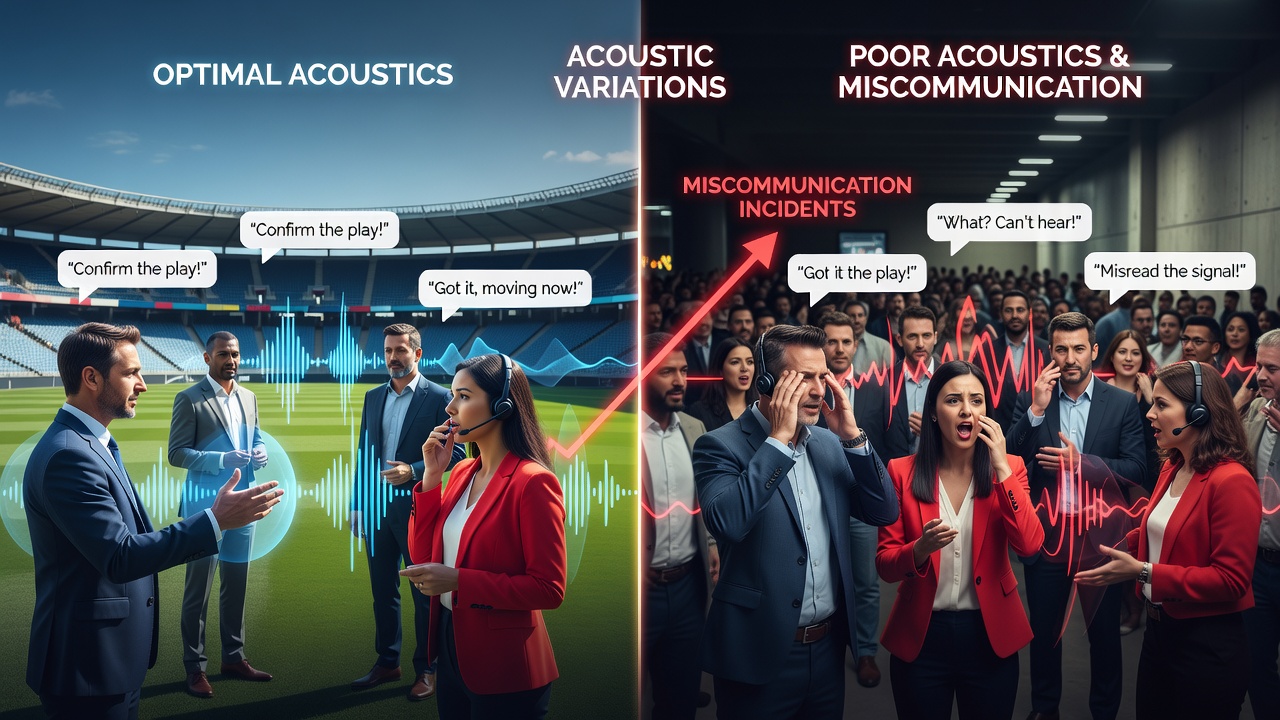
Stadiums generate complex acoustic environments where crowd volume, echo patterns, and broadcast systems create layered sound fields that shift rapidly during events, and these conditions often align with documented rises in player coordination errors across team sports. Research from multiple venues shows how decibel spikes during key plays coincide with breakdowns in verbal cues and hand signals among athletes operating under tight time constraints.
Stadium Sound Profiles and Measurement Data
Acoustic measurements taken across major league facilities reveal consistent patterns where baseline crowd noise ranges from 70 to 85 decibels during routine play yet climbs above 100 decibels in response to scoring sequences or critical defensive stands, while reverberation times in enclosed or partially covered structures extend signal decay by 1.5 to 3 seconds according to engineering reports compiled by North American stadium operators. Studies conducted by Australian research groups further document how wind patterns at open-air coastal sites alter sound propagation, directing crowd energy unevenly across playing surfaces and creating localized zones where communication clarity drops sharply.
Fast-Paced Interaction Challenges
Team sports demand split-second exchanges of information through calls, gestures, and positional adjustments, yet acoustic interference disrupts these channels when overlapping frequencies from cheers, music, and public address systems mask frequencies between 500 and 4000 hertz that carry most speech content. Data collected during basketball and soccer matches indicate elevated rates of defensive misalignments and passing inaccuracies in periods immediately following loud crowd surges, with analysts noting particular vulnerabilities during transition plays where players must process auditory input alongside visual tracking of multiple teammates and opponents.
Documented Correlations from Venue Studies
Longitudinal observations at European football grounds and North American gridiron stadiums link specific acoustic events to measurable increases in coordination failures, such as when sudden volume peaks coincide with incomplete defensive rotations or mistimed set-piece executions. Figures from a 2025 Canadian university acoustics project showed a 12 to 18 percent rise in signal acknowledgment errors during segments where ambient sound exceeded 95 decibels for durations longer than 8 seconds, while similar patterns appeared in indoor basketball environments where ceiling reflections amplified certain frequencies and reduced directional cue accuracy for perimeter players. Observers note that July 2026 data releases from ongoing multi-venue monitoring programs are expected to expand these datasets with additional high-resolution recordings from recent international tournaments.
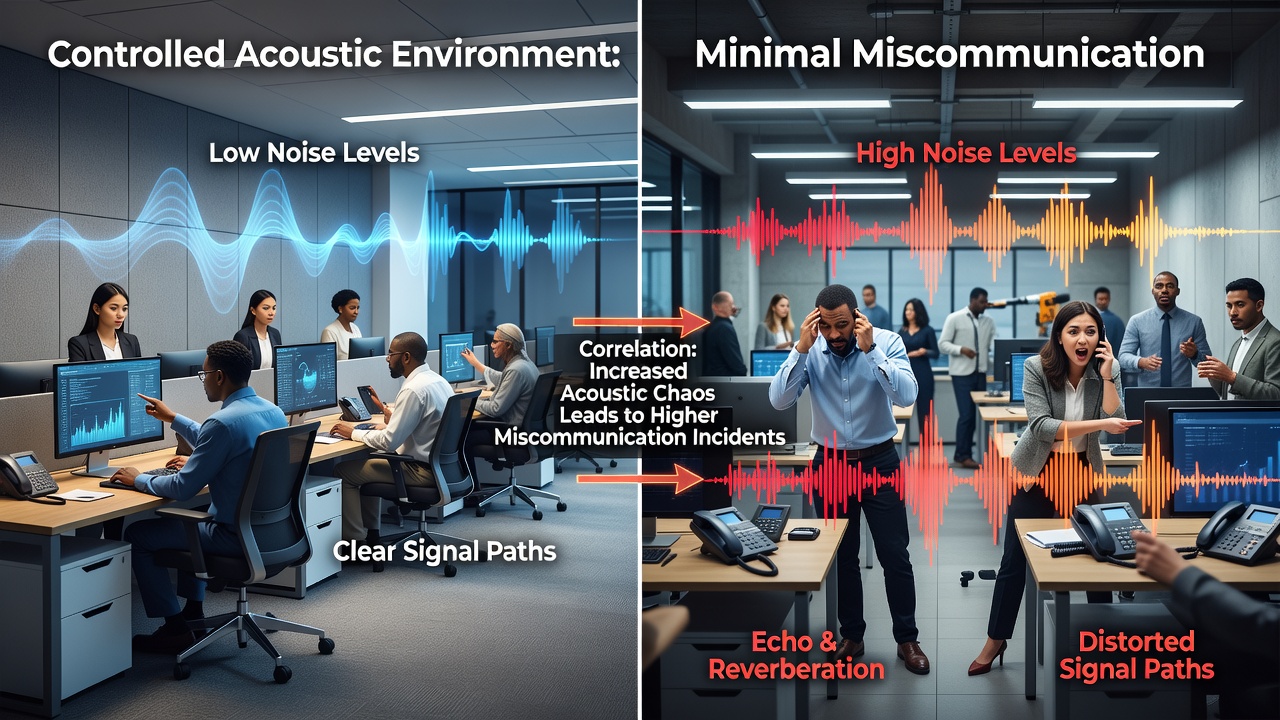
Additional analysis from industry acoustics reports highlights how public address timing interacts with natural crowd dynamics to produce brief windows of compounded interference, particularly when announcements overlap with sustained chanting or rhythmic clapping sequences that occupy similar frequency bands to player huddles. Those who've examined game footage alongside synchronized audio logs identify repeated instances where quarterbacks or point guards adjust routes or defensive assignments after initial calls fail to register clearly across the formation.
Environmental Factors and Regional Variations
Geographic and structural differences produce distinct acoustic signatures that affect communication reliability in measurable ways, with domed venues in colder climates showing stronger low-frequency buildup from crowd energy while open designs in warmer regions allow more high-frequency attenuation over distance. European regulatory assessments of occupational noise exposure have supplied baseline comparisons that sports researchers adapt when evaluating athlete auditory strain during extended fixture congestion periods, and these datasets help isolate variables such as seating bowl geometry and surface materials that influence how sound travels from stands to field level.
Response Patterns and Adjustment Mechanisms
Athletes and coaching staffs implement layered communication protocols that combine pre-established visual signals with abbreviated verbal codes designed to penetrate ambient interference, yet performance logs indicate residual error rates persist when acoustic conditions exceed calibrated thresholds for those systems. Teams operating in high-reverberation spaces often shift emphasis toward pre-snap positioning adjustments and sideline visual boards to reduce reliance on spoken exchanges during peak noise intervals, a practice documented across multiple professional leagues through coordinated video adn audio review processes.
Conclusion
Available measurements establish clear temporal alignments between acoustic environment spikes and elevated miscommunication incidents in stadium-based team interactions, with data from varied geographic sources confirming the role of sound propagation variables in shaping coordination outcomes. Continued monitoring through 2026 and beyond will supply finer-grained correlations that inform both facility design considerations and in-game adaptation strategies across professional sports.