Acoustic Factors Shaping Officiating Decisions in Crowded NFL Games, NBA Arenas, and Soccer Stadiums
Written by Rosa Klein · Jul 17, 2026
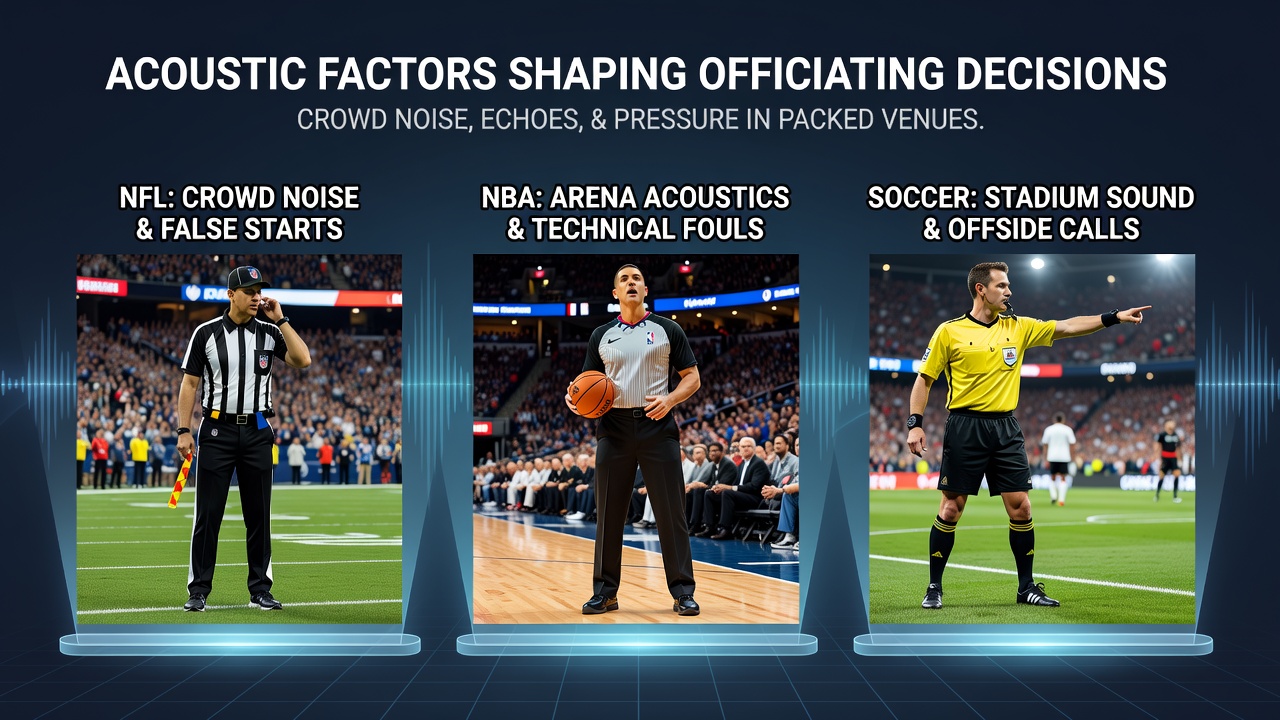
Acoustic Factors Shaping Officiating Decisions in Crowded NFL Games, NBA Arenas, and Soccer Stadiums
Stadium acoustics create measurable challenges for officials across professional leagues where crowd volume directly intersects with real-time judgment calls. Data from multiple seasons shows noise levels in NFL venues often exceed 100 decibels during critical plays, while NBA arenas and soccer stadiums produce comparable spikes that affect communication between referees and players. Researchers tracking these environments note that auditory interference alters response times and accuracy rates in ways that vary by sport and venue design.
Noise Patterns in NFL Settings
Officials in the National Football League work amid constant auditory pressure from end-zone sections and upper decks that amplify through enclosed structures. Studies conducted at large outdoor stadiums reveal that crowd roars during third-down situations can reach peaks that mask verbal signals between line judges and the head referee. One analysis of game footage from the 2024 season indicated that penalty flags thrown in the final two minutes of halves showed slight variations in frequency compared to quieter periods, though causation remains tied to multiple variables including player positioning and game context.
Coaches and players adjust snap counts and play calls to counter this environment, yet officials must maintain focus on visual cues alone when audio channels become unreliable. Equipment tests by league personnel demonstrate that wireless headsets used by crews experience occasional dropouts under extreme decibel loads, forcing greater reliance on hand signals and eye contact among the seven-person crews.
Acoustic Dynamics Inside NBA Arenas
Basketball officials navigate a different acoustic profile where arena ceilings and seating bowls concentrate sound waves toward the court surface. Research from sports engineering labs indicates that sustained cheering during free-throw attempts and inbound plays creates localized pressure zones near the scorer's table. These conditions coincide with moments when referees review shot-clock violations or out-of-bounds determinations that depend on precise timing judgments.
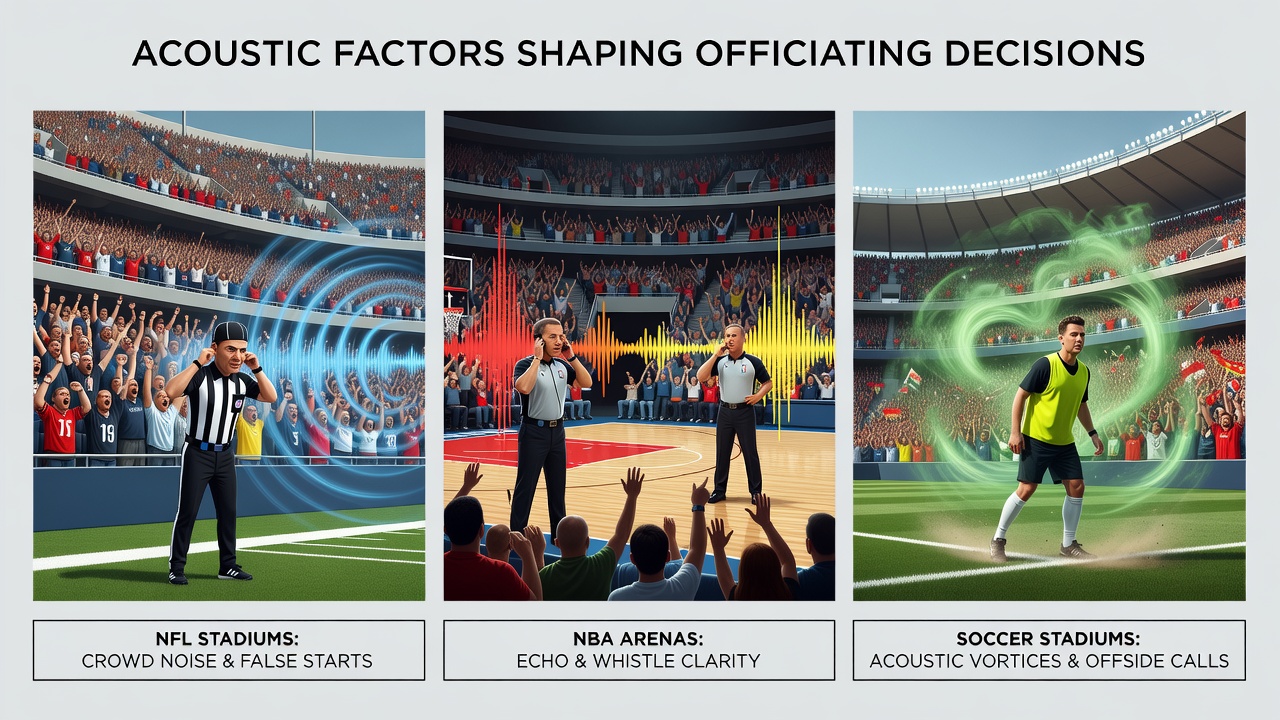
League data collected through wearable microphones on officials shows elevated heart-rate responses during high-decibel stretches, correlating with brief windows where peripheral awareness of player contact may shift. Training protocols developed by the NBA now incorporate simulated crowd audio tracks to prepare crews for these conditions before they reach regular-season floors.
Soccer Stadium Environments and Referee Communication
Soccer matches present extended periods of continuous noise that build across 90 minutes, particularly in European and South American venues where standing terraces channel sound directly onto the pitch. FIFA technical reports document that assistant referees positioned along touchlines encounter the strongest acoustic masking when making offside decisions near packed stands. Headsets linking the central referee to assistants sometimes require volume adjustments mid-match to maintain clarity amid supporter chants and drum sections.
Video assistant referee rooms located away from the main stands provide some isolation, yet the primary officials on the field still operate without such buffers. Data compiled across multiple World Cup qualifiers and domestic leagues shows that foul calls near the goal lines occur at rates influenced by both visual evidence and the surrounding sound environment, prompting ongoing review of positioning guidelines.
Shared Acoustic Variables Across Leagues
Common factors emerge when comparing these three sports. Venue architecture plays a central role, with domed or partially enclosed structures reflecting sound more effectively than open-air designs. Crowd density during sold-out games in July 2026 schedules continues to produce consistent decibel readings that exceed thresholds identified in earlier laboratory studies on auditory distraction. Officials across disciplines report similar adaptations, including increased use of pre-game briefings focused on non-verbal cues and post-play conferences to confirm calls made under peak noise.
Technology integration varies by league, yet the core challenge remains consistent: distinguishing player-generated sounds from spectator noise when assessing infractions. Sensor data from tracking systems now supplements traditional observation, allowing leagues to quantify how often officials reposition themselves to optimize line-of-sight when audio input becomes compromised.
Conclusion
Acoustic conditions in professional sports venues exert documented effects on the information available to officials during live competition. Patterns observed in NFL, NBA, and soccer environments highlight the interaction between sound levels, decision windows, and officiating mechanics. Continued monitoring through league-specific studies and cross-sport comparisons provides the factual basis for equipment refinements and training adjustments that address these environmental pressures.