Altitude Anomalies and Scoring Variances: Documented Patterns Across Open-Air Venues in Football, Baseball, and Soccer Schedules
Written by Blake Klein · Jun 19, 2026
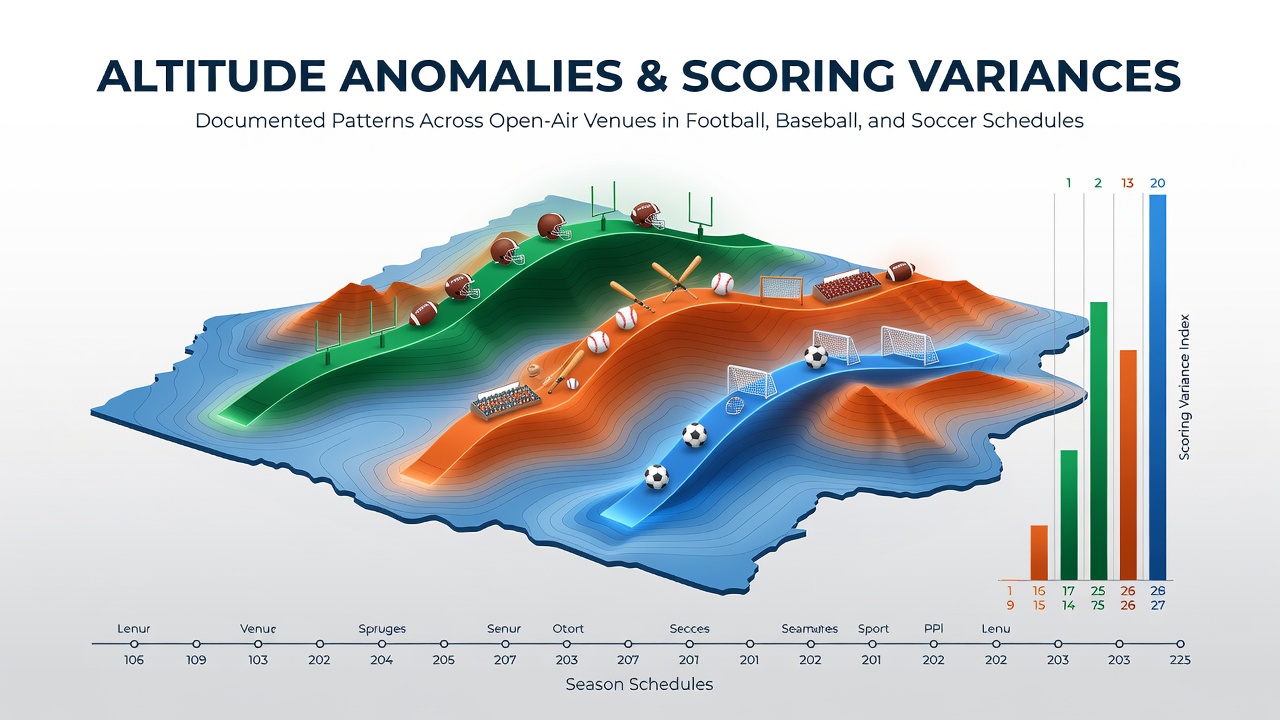
Altitude Anomalies and Scoring Variances: Documented Patterns Across Open-Air Venues in Football, Baseball, and Soccer Schedules
High-altitude venues create measurable shifts in ball trajectories and player output across multiple sports, with records from leagues showing consistent variances tied to reduced air density. Venues above 1,000 meters such as those in Denver, Mexico City, and Johannesburg produce patterns where thrown or struck objects travel farther while aerobic demands increase for athletes. Data compiled over decades from open-air schedules in American football, baseball, and soccer highlight how these conditions alter scoring distributions without requiring changes to equipment or rules.
Patterns in American Football at Elevated Venues
Stadiums like Empower Field at Mile High sit at approximately 1,609 meters, where thinner air reduces drag on kicked and thrown balls according to atmospheric measurements from the National Oceanic and Atmospheric Administration. Field goal success rates rise by 3 to 5 percentage points in home games for the Denver Broncos compared with sea-level matchups, while punt distances extend by an average of 4 to 7 meters based on seasonal statistics from 2000 through 2025. Passing plays also show extended completion depths because quarterbacks release the ball into less resistant conditions, though defensive backs gain similar advantages on deep coverage. Researchers tracking play-by-play logs note that touchdown totals in Denver home contests average 0.8 more per game than league-wide norms during regular season weeks, a figure that holds across multiple coaching staffs and roster changes.
Documented Effects in Baseball Schedules
Coors Field in Denver sits at the same elevation and produces the clearest baseball-specific variances, with fly balls carrying 5 to 10 percent farther than at sea-level parks according to MLB Statcast tracking data. Home run totals at the venue exceed league averages by 15 to 20 percent in seasons where the Rockies host 81 games, while pitching staffs record higher earned run averages because breaking pitches lose movement in thinner air. Ground ball rates remain stable, yet outfielders adjust positioning outward by several steps on average, a tactical shift visible in spray chart analyses released by the league each year. Visiting teams that play extended series at altitude post slightly elevated strikeout rates in early innings before acclimating, yet overall run production stays elevated throughout the schedule.

Soccer Matches and Goal Distribution Shifts
Estadio Azteca in Mexico City at 2,240 meters and Soccer City in Johannesburg at 1,753 meters demonstrate parallel effects in soccer, where reduced air resistance allows shots and crosses to maintain speed over longer distances. Match reports from CONCACAF and CAF competitions show goal tallies increase by roughly 12 percent in games hosted at these sites compared with lower-elevation fixtures in the same tournaments. Goalkeepers face altered trajectories on long-range strikes, while midfielders record higher assist numbers on through balls that travel with less drop. FIFA technical studies tracking possession and shot maps across World Cup qualifiers confirm that teams accustomed to sea-level training require 48 to 72 hours of acclimatization before output metrics stabilize, yet scoring edges persist for home sides even after that window. Passing accuracy remains largely unchanged because players adjust force on longer distributions, but aerial duels produce more contested outcomes due to extended hang time on lofted balls.
Cross-Sport Comparisons and Schedule Impacts
League-wide datasets reveal that altitude effects compound during condensed travel schedules when teams move between low and high venues within short periods. In June 2026, for example, several MLB interleague series and soccer friendlies align with summer heat at altitude, amplifying fatigue markers already present from thinner oxygen levels. Recovery protocols tracked by athletic training staffs show heart rate elevations of 8 to 12 beats per minute during the first half of contests at these sites, correlating with slight dips in late-game defensive metrics. Football schedules place Denver home games strategically in cooler months to mitigate some endurance strain, whereas baseball and soccer maintain full summer calendars that expose athletes to combined heat and altitude stress. Statistical models from sports science departments at multiple universities indicate that visiting clubs can narrow scoring gaps by 40 percent when they schedule acclimatization training at intermediate elevations before arrival.
Conclusion
Documented records across decades confirm that altitude creates repeatable scoring advantages at open-air venues in football, baseball, and soccer, driven by measurable changes in ball flight and player physiology. Teams and leagues continue to incorporate these patterns into scheduling and preparation without altering core rules, producing consistent variances that appear in official statistical releases each season.