Birth Month Patterns and Draft Selection Rates Across Basketball, Baseball, and Hockey Leagues
Written by Finley Butler · Aug 19, 2026
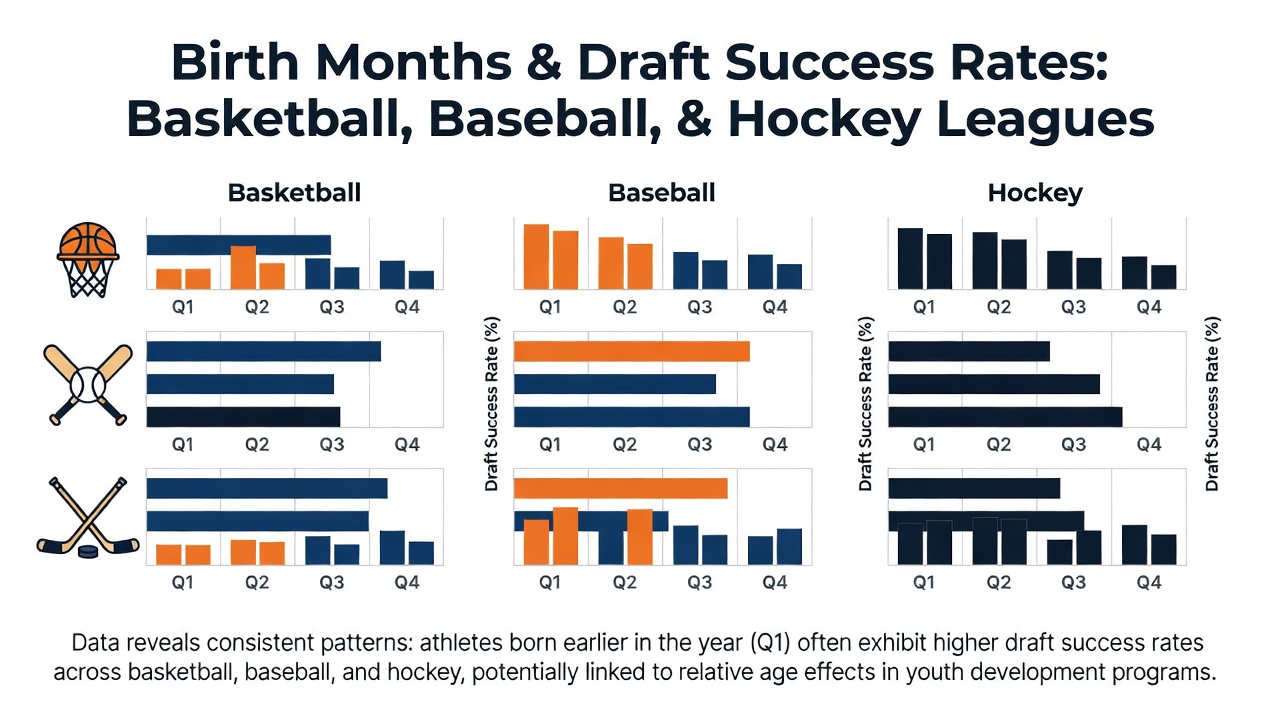
Birth Month Patterns and Draft Selection Rates Across Basketball, Baseball, and Hockey Leagues
Professional drafts in basketball, baseball, and hockey reveal consistent patterns tied to birth months, a phenomenon researchers trace to age eligibility cutoffs that create relative age advantages for those born earlier in the calendar year. These cutoffs typically fall on January 1 in many leagues, which means players born in January through March enter age-group competitions with several months more physical development than peers born later in the same year. Data from multiple draft classes shows this edge carries forward into professional selection rates, particularly in sports where size, strength, and coordination matter at young ages.
Relative Age Effect Basics in Youth Development
Youth leagues set annual age brackets that reward earlier birthdays with extra time to build motor skills and physical maturity before competition intensifies. Observers note that athletes born in the first quarter often receive more playing time, better coaching attention, and selection to elite teams during critical developmental windows. This early bias compounds because advanced opportunities lead to higher-level training, which further widens gaps by the time players reach draft eligibility. Studies tracking thousands of prospects across North America confirm the skew persists even after controlling for talent identification metrics.
Basketball Draft Trends
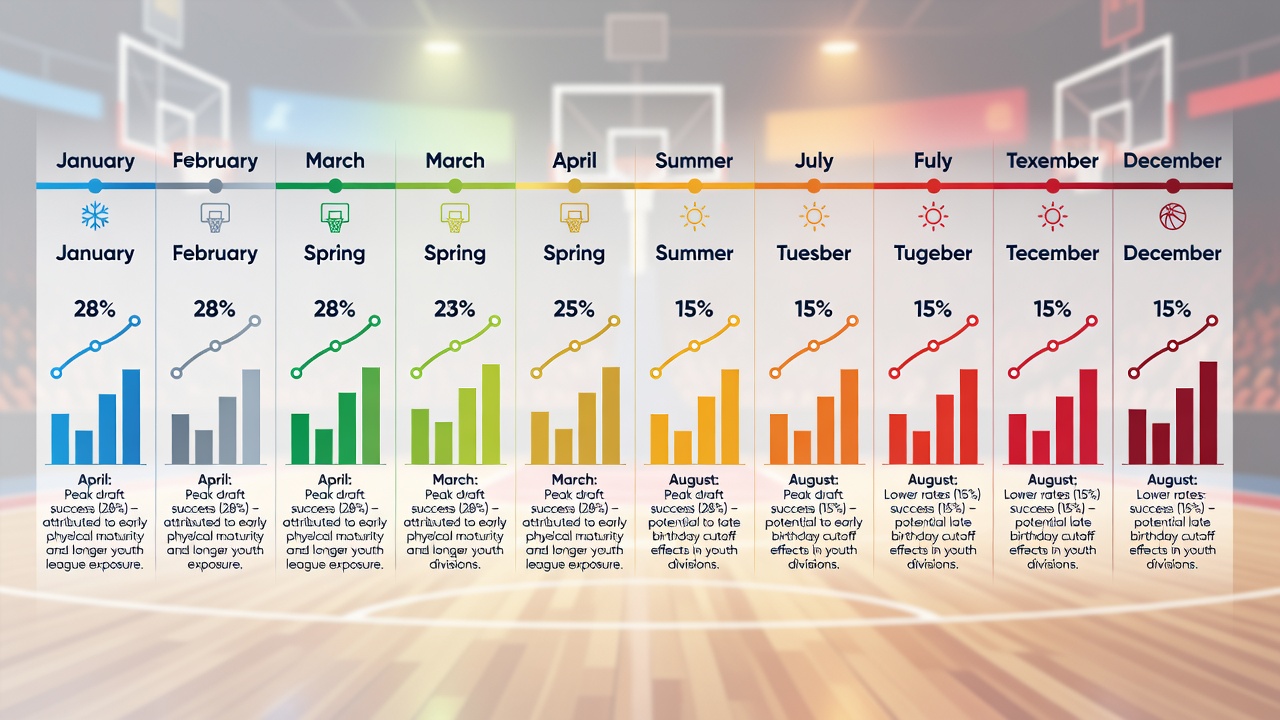
NBA draft records from 2000 onward indicate overrepresentation of players born between January and March, while those born in October through December appear less frequently among first-round selections. College programs feeding the draft mirror the pattern, with rosters showing similar quarterly imbalances. Height and strength advantages during high school seasons help January-March players secure scholarships and starting roles, routes that funnel directly into professional evaluation. Recent analyses of 2024 and 2025 draft classes continue to reflect these distributions, though some teams now factor relative age into scouting models to identify overlooked later-born talent.
Baseball Selection Data
MLB drafts exhibit parallel trends, with pitchers and position players born in the first half of the year selected at higher rates than those born later. Age cutoffs for youth baseball align closely with calendar years, giving early-birth players extended seasons to refine pitching mechanics and hitting timing. Draft combine measurements and minor-league performance logs reveal measurable edges in velocity and power metrics for first-quarter athletes during their initial professional years. Teams have adjusted scouting reports in response, yet the underlying distribution in draft classes remains skewed as of the 2025 selections.
Hockey League Patterns
NHL entry drafts display one of the strongest relative age effects among major North American leagues, with January to April births dominating early rounds across multiple decades. Canadian and American youth hockey programs use January 1 cutoffs that amplify physical differences during peak growth periods, leading to greater representation on national development teams. Goaltenders and skaters alike show the pattern in draft eligibility lists, where later-born players must overcome both developmental and selection biases to reach professional ranks. Data compiled through 2025 drafts shows the imbalance holding steady despite increased awareness in coaching circles.
Cross-League Comparisons and Recent Shifts
When researchers align draft data from the NBA, MLB, and NHL side by side, basketball shows the mildest quarterly skew while hockey registers the most pronounced. Baseball falls in between, influenced by the sport's emphasis on skill refinement that partially offsets size advantages. August 2026 draft previews from scouting services already flag ongoing efforts by front offices to quantify and correct for these birth-month effects through advanced analytics. Some organizations now include birth-date adjustments in their prospect grading systems, aiming to surface talent that traditional age-group pathways might have bypassed.
International players entering these drafts add another layer, since many countries use different cutoff dates that interact with North American eligibility rules. European hockey prospects and Latin American baseball talents sometimes arrive with altered developmental timelines, which can either mitigate or reinforce the standard patterns depending on their specific birth quarters. League-wide statistics released in early 2026 continue to track these variables as more data accumulates from recent international signings.
Conclusion
Draft records across basketball, baseball, and hockey demonstrate measurable connections between birth months and selection outcomes driven by established age-group structures. Ongoing adjustments in scouting practices may gradually alter these distributions, yet current evidence shows the patterns remain embedded in how talent flows from youth systems into professional ranks.