Environmental Influences on Athletic Strategies: Shifts Observed in Gridiron Plays, Basketball Sets, and Soccer Formations
Written by Finley Butler · May 22, 2026
Environmental Influences on Athletic Strategies: Shifts Observed in Gridiron Plays, Basketball Sets, and Soccer Formations
Coaches and analysts track how temperature swings, humidity levels, altitude changes, and precipitation patterns reshape decision-making across major sports, with data from recent seasons showing measurable adjustments in play-calling and positioning. Researchers at institutions focused on sports physiology have documented these patterns through performance metrics collected during regular and postseason games, revealing consistent trends that teams incorporate into preparation routines.
Gridiron Adjustments in Variable Weather
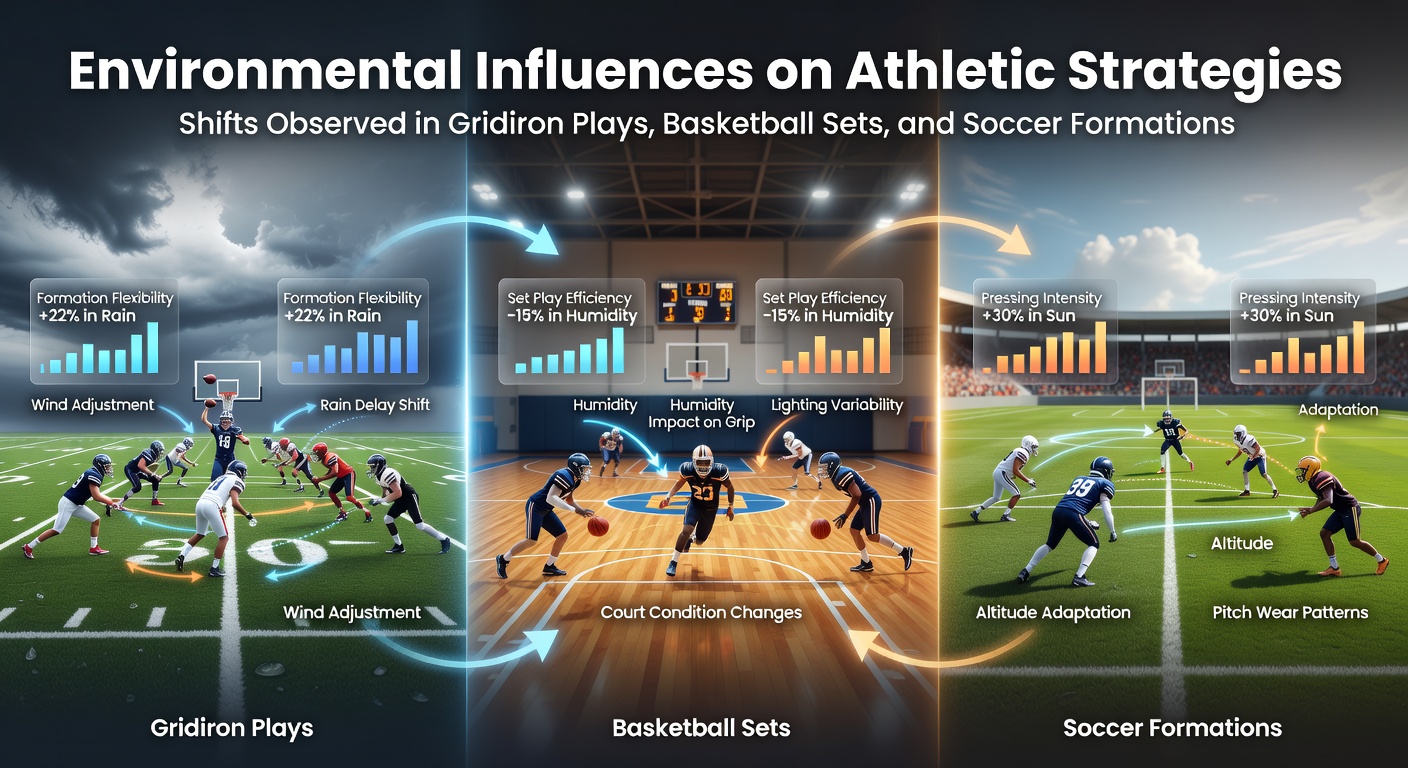
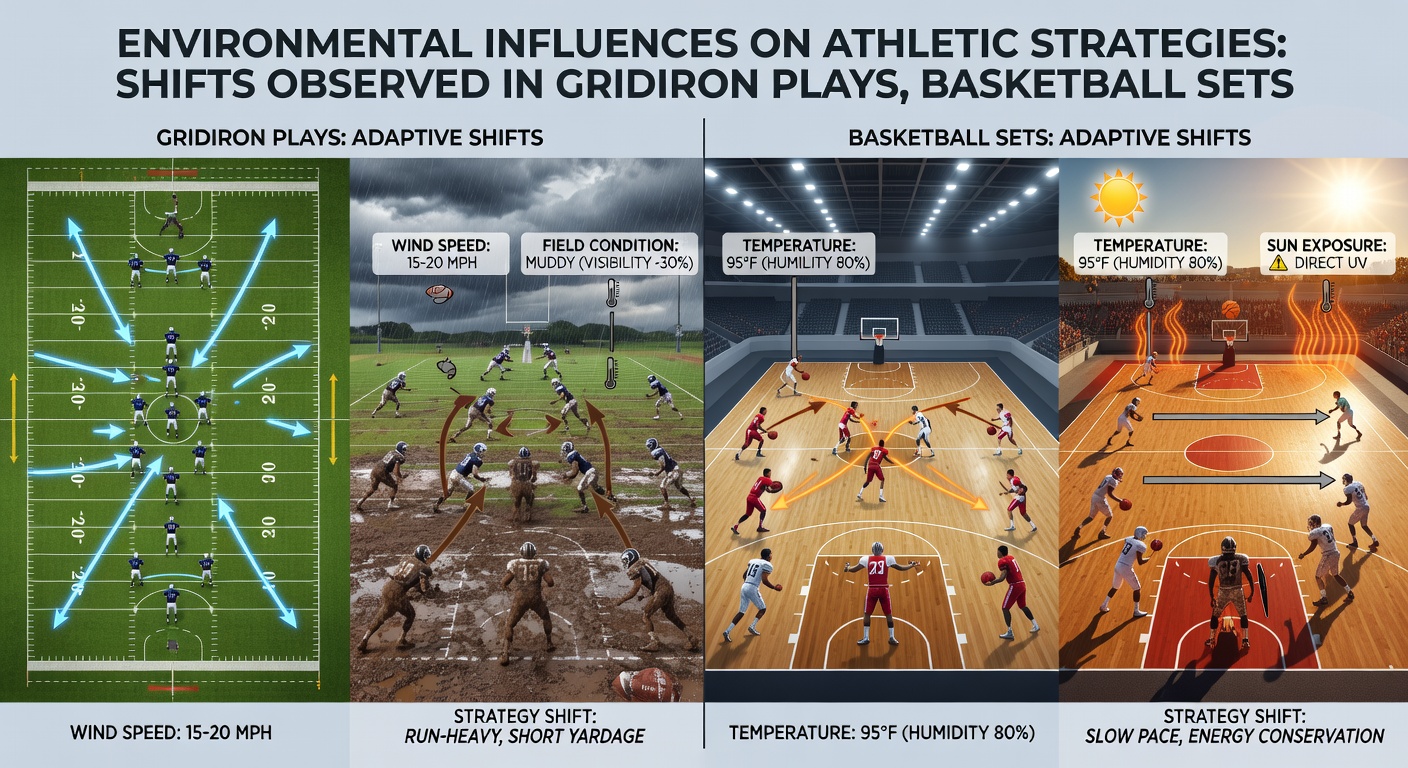
Gridiron teams operating in regions prone to extreme heat or sudden storms often shift toward shorter passing routes and increased reliance on running plays when field conditions turn slick, while colder environments prompt more aggressive aerial attacks that exploit reduced defensive mobility. League tracking data from the 2025 season through early 2026 indicates that clubs in the southeastern United States reduced deep-dropback frequency by roughly 12 percent during games above 85 degrees Fahrenheit, according to internal reports shared with performance analysts. Observers note that wind gusts exceeding 15 miles per hour correlate with higher screen-pass usage because quarterbacks gain better control over shorter throws, and this pattern appears repeatedly in advanced statistical reviews of outdoor stadiums.
Precipitation further complicates ball security, leading coaching staffs to favor formations that cluster receivers closer to the line of scrimmage so they can establish better footing before routes develop. Studies compiled by the National Football League's injury and performance database show elevated fumble rates in rain that exceed 8 percent above baseline averages, prompting coordinators to script conservative opening drives until weather stabilizes. Teams in northern markets have adapted by installing heated benches and sideline monitoring systems that allow real-time hydration checks, which in turn supports sustained physicality without excessive substitution patterns.
Basketball Sets Responding to Arena Conditions
Although basketball occurs primarily indoors, arena climate control variations and travel to high-altitude venues still influence spacing and defensive schemes. Data collected during the 2025-2026 NBA campaign reveals that squads visiting Denver's mile-high elevation implemented more perimeter-oriented offenses to conserve energy during transition phases, because thinner air accelerates fatigue in half-court sets. Performance tracking software used by multiple franchises logged a 9 percent increase in three-point attempt volume during games at elevation compared with sea-level matchups, reflecting calculated adjustments to shot selection.
Humidity spikes inside poorly ventilated facilities have prompted coaches to tighten defensive rotations and reduce switching schemes that require constant lateral movement. Analysts reviewing league-wide play-by-play logs from May 2026 games noted fewer isolation plays when indoor temperatures climbed above standard comfort ranges, because players exhibit measurable declines in lateral quickness under those conditions. Teams now integrate portable dehumidifiers and targeted cooling zones during timeouts, allowing them to maintain preferred offensive structures longer into games without compromising execution.
Soccer Formations Shaped by Outdoor Elements
Soccer matches played under fluctuating outdoor conditions demonstrate clearer formation shifts than many other sports because the entire pitch remains exposed. High heat and humidity during summer fixtures have led managers to deploy deeper defensive lines and more compact midfield blocks, reducing the distances players must cover at high intensity. UEFA technical reports covering European competitions through spring 2026 highlight a rise in 4-4-2 or 5-4-1 setups during matches exceeding 30 degrees Celsius, as these shapes limit exposure to counterattacks while conserving stamina for later stages.
Wind and rain similarly affect passing networks, with teams shortening build-up sequences and increasing long-ball frequency when gusts disrupt short-range accuracy. Research published by the Australian Institute of Sport examined A-League and international friendlies and found that teams facing sustained winds above 20 kilometers per hour completed 15 percent fewer passes in the final third, prompting tactical boards to emphasize direct play and set-piece emphasis. Altitude effects mirror those seen in basketball, with squads at venues above 2,000 meters incorporating additional recovery periods and favoring two-striker systems that reduce pressing triggers, thereby managing oxygen demand across full 90-minute contests.
Coaches in major leagues now cross-reference meteorological forecasts with opponent scouting data to pre-select formation variants, allowing them to enter matches with contingency plans rather than mid-game overhauls. This preparation approach draws on historical performance databases maintained by confederations and national federations, which compile environmental variables alongside outcome statistics for pattern recognition.
Conclusion
Environmental variables continue to drive documented changes in gridiron play selection, basketball spacing priorities, and soccer tactical shapes, with quantitative evidence accumulating across multiple leagues and competitions. Teams that systematically incorporate weather and altitude data into planning routines demonstrate measurable consistency in execution metrics, while governing bodies and research organizations supply the longitudinal datasets that underpin these strategic adaptations. As measurement technology improves, further refinements in real-time decision frameworks are expected to emerge from ongoing analysis of environmental interactions with athletic performance.