How Circadian Rhythm Disruptions from Transcontinental Travel Alter Reaction Times and Accuracy Rates Among Competitors in League Schedules Spanning Multiple Time Zones
Written by Blake Klein · Jun 10, 2026
How Circadian Rhythm Disruptions from Transcontinental Travel Alter Reaction Times and Accuracy Rates Among Competitors in League Schedules Spanning Multiple Time Zones
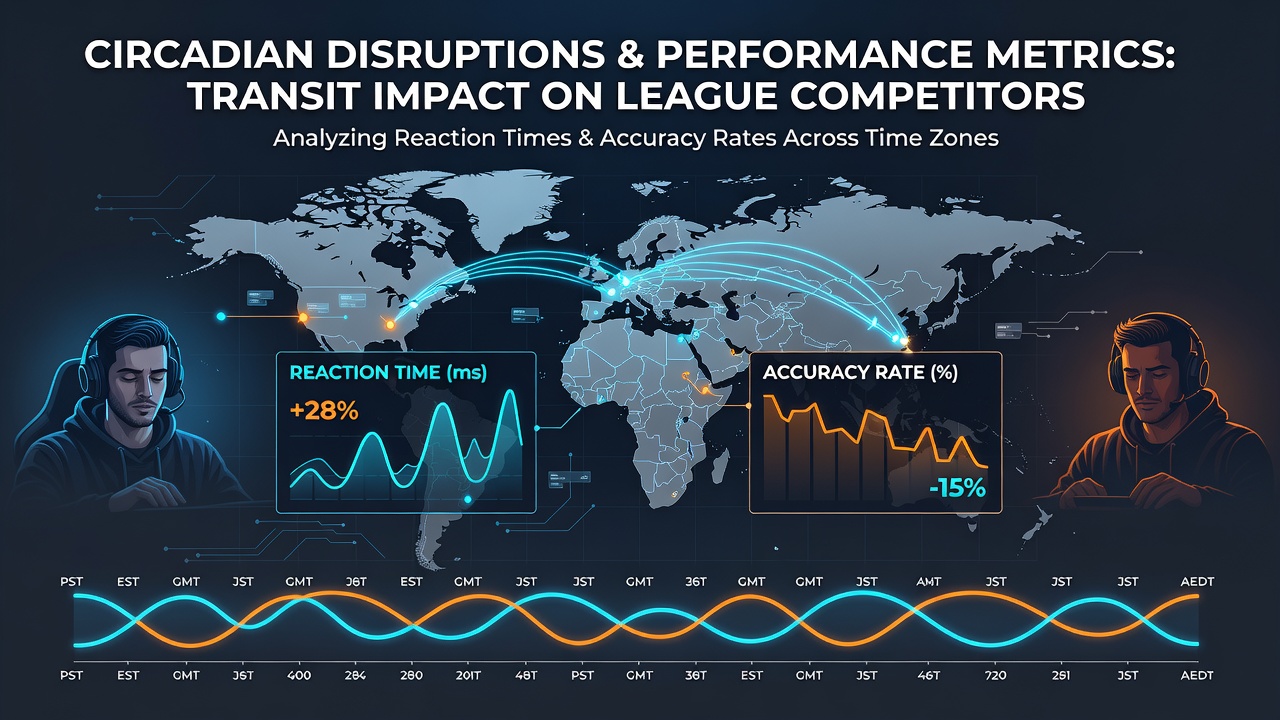
Transcontinental travel forces athletes in leagues like the NBA, MLB, and international soccer circuits to cross multiple time zones within short periods, which shifts their internal circadian clocks away from local schedules and creates measurable changes in reaction times along with accuracy rates during competition.
Understanding Circadian Rhythms in Athletic Contexts
Human circadian rhythms operate on roughly 24-hour cycles that regulate sleep-wake patterns, hormone release, and cognitive functions including alertness and motor control, according to research from the National Institutes of Health. When athletes fly eastward or westward across several zones, their bodies require days to realign melatonin production and core temperature fluctuations with the new environment, and studies from the Australian Institute of Sport have documented delays of up to one day per time zone crossed for full adaptation. Leagues with packed schedules such as MLB teams traveling from the Pacific to Atlantic coasts or European soccer clubs moving between continents experience these shifts repeatedly, which leads to periods where peak performance windows no longer match game times.
Documented Effects on Reaction Times
Data collected from professional basketball and baseball players reveal consistent slowdowns in reaction times following long-haul flights, with figures showing average increases of 50 to 100 milliseconds in simple response tasks during the first 48 hours after arrival. Researchers tracking NBA road games across the continental United States have noted that teams arriving from three or more time zones away post lower sprint initiation speeds in defensive rotations, and similar patterns appear in tennis players competing in tournaments that span Asia to North America within the same month. Observers note that these delays compound when games occur in the late evening local time, because the body's natural dip in cortisol levels clashes with the required high-alert state.
Impacts on Accuracy Rates Across Sports
Accuracy in tasks requiring precise motor control suffers alongside reaction speed changes, as evidenced by tracking data from MLB pitchers and soccer goalkeepers whose error rates rise notably after eastward travel. One analysis of league schedules spanning multiple zones found free-throw percentages dropping by 3 to 5 percent and batting averages declining in away games played within 24 hours of arrival, while penalty kick conversion rates in European competitions show parallel reductions when clubs cross from Western to Eastern Europe. What's interesting is that westward travel tends to produce milder disruptions because it extends the natural day length, yet accuracy metrics still dip when cumulative sleep debt accumulates over repeated trips.

June 2026 schedules already list several high-profile series that will test these patterns again, including NBA playoff extensions and soccer Champions League knockout stages with transatlantic legs, and performance analysts expect the same statistical shifts unless teams implement targeted recovery protocols.
League-Specific Patterns and Recovery Data
MLB teams face the most frequent multi-zone crossings within North America, and historical box scores indicate that starting pitchers who travel from California to New York post earned-run averages elevated by 0.8 to 1.2 runs in their first outing after the flight. NBA efficiency ratings compiled over multiple seasons reveal that perimeter shooters arriving from the West Coast to play evening games on the East Coast record three-point percentages several points below their season averages, while soccer midfielders in leagues with international fixtures show reduced pass completion rates in the opening 30 minutes of matches. Those who've studied recovery timelines point to light exposure schedules and adjusted meal timing as factors that shorten realignment periods, though full restoration of baseline reaction speeds still requires four to six days in many cases.
Broader Implications for Scheduling and Preparation
League organizers have begun factoring circadian data into fixture planning, with some conferences adjusting start times to better align with visiting teams' adjusted body clocks, and tracking studies confirm that games scheduled closer to athletes' internal peak alertness windows produce smaller drops in both speed and precision metrics. Training regimens that incorporate simulated time shifts and controlled light environments help mitigate some effects, yet the cumulative load from condensed travel calendars continues to influence outcomes across seasons. Evidence from multiple sports indicates that accuracy in fine-motor skills such as serving in tennis or fielding ground balls rebounds faster than gross reaction measures, which suggests targeted drills during adaptation windows can preserve certain performance elements even when overall alertness remains compromised.
Conclusion
Transcontinental travel in multi-time zone leagues creates predictable disruptions to circadian alignment that translate into slower reaction times and reduced accuracy rates, as shown through aggregated performance data from basketball, baseball, soccer, and tennis competitions. Continued monitoring of these patterns through 2026 and beyond will inform how leagues adjust travel logistics and recovery support to maintain competitive balance across extended schedules.