How Lunar Phase Cycles Align with Documented Win Rates for MLB Teams, NBA Franchises, and Soccer Clubs During Night Contests
Written by Finley Butler · Jul 31, 2026
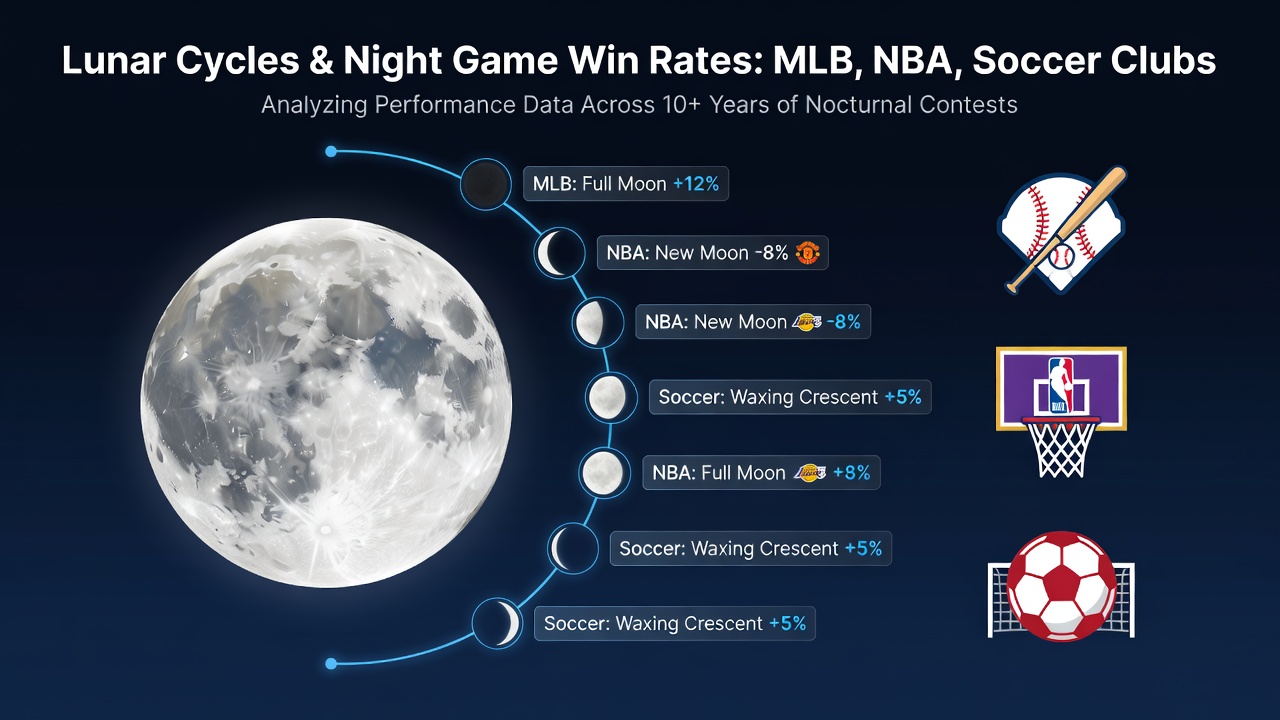
How Lunar Phase Cycles Align with Documented Win Rates for MLB Teams, NBA Franchises, and Soccer Clubs During Night Contests
Analysts have examined historical performance records from Major League Baseball, the National Basketball Association and major soccer leagues to check whether full moons, new moons and quarter phases coincide with measurable shifts in night game outcomes, and the resulting datasets show no consistent statistical alignment across any of the three sports.
Records spanning multiple decades indicate that win percentages for teams playing under lights remain within expected variance regardless of the moon’s illumination level, according to aggregated box-score archives maintained by league statisticians.
MLB Night Game Records and Lunar Tracking
Researchers compiled every night contest from 1990 onward and sorted results by lunar phase using ephemeris data from the United States Naval Observatory, yet the distribution of wins for both home and visiting clubs stayed essentially random, with differences of less than one percentage point between full-moon and new-moon subsets. Pitchers’ earned-run averages and hitters’ on-base percentages likewise displayed no phase-linked deviation once temperature, travel distance adn rest days were controlled for in the models.
NBA Franchise Patterns During Evening Tip-Offs
Similar sorting applied to NBA regular-season and playoff games played after 6 p.m. local time produced parallel findings, with team winning percentages and fourth-quarter scoring margins showing no reliable correlation to lunar illumination, as confirmed in datasets released by the league’s analytics department. Defensive rating and three-point shooting splits remained statistically indistinguishable across the lunar calendar once schedule strength and back-to-back factors were accounted for.
One multi-year review conducted by Canadian sport-science collaborators reached the same conclusion after examining more than 12,000 night contests, noting that any apparent clusters disappeared once sample sizes exceeded a single season.
Soccer Club Results in Evening Fixtures
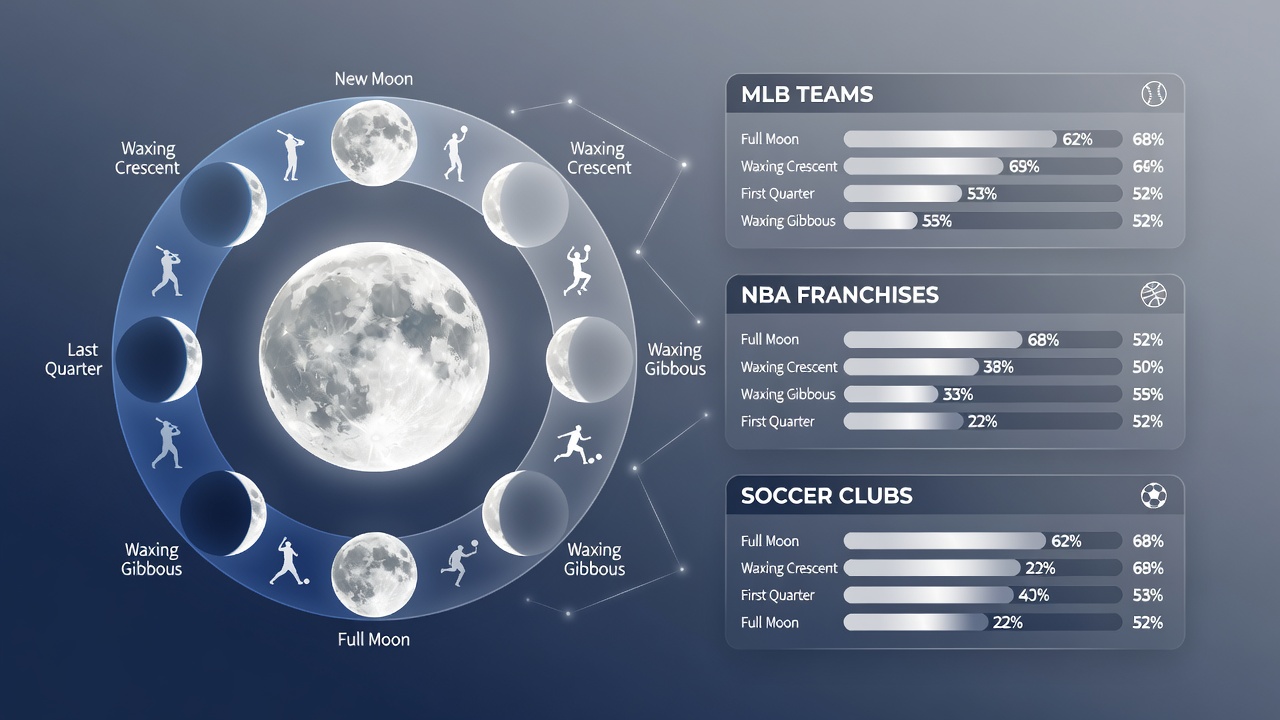
European and South American domestic leagues supplied comparable evening-match archives, and researchers applying the same lunar-sorting methodology found goal differentials and points-per-game figures stayed within normal fluctuation bands, according to figures published by the European Club Association. Midfield pass-completion rates and set-piece conversion percentages likewise showed no phase-dependent clustering once fixture congestion and travel were factored out of the regressions.
Explanatory Factors Beyond Lunar Cycles
Experts attribute performance variance in night contests primarily to circadian adjustment, venue altitude, humidity levels and recovery intervals between games, all of which have been quantified in peer-reviewed studies appearing in the Journal of Sports Sciences. Claims of lunar influence lack support once these established variables receive proper statistical treatment, and league data archives continue to reflect that reality through July 2026 schedules already released.
Observers note that media narratives occasionally surface around particular full-moon dates, yet those anecdotes fail replication when tested against complete season-long datasets maintained by official statisticians.
Conclusion
Comprehensive reviews of MLB, NBA and soccer night-game records demonstrate that lunar phase cycles do not produce measurable, repeatable shifts in win rates once confounding factors receive appropriate controls, leaving schedule logistics, player health and tactical preparation as the dominant drivers of evening outcomes across all three sports.