Relative Age Patterns Shape Draft Success, Peak Windows, and Longevity in Major Leagues
Written by Finley Butler · Jun 26, 2026
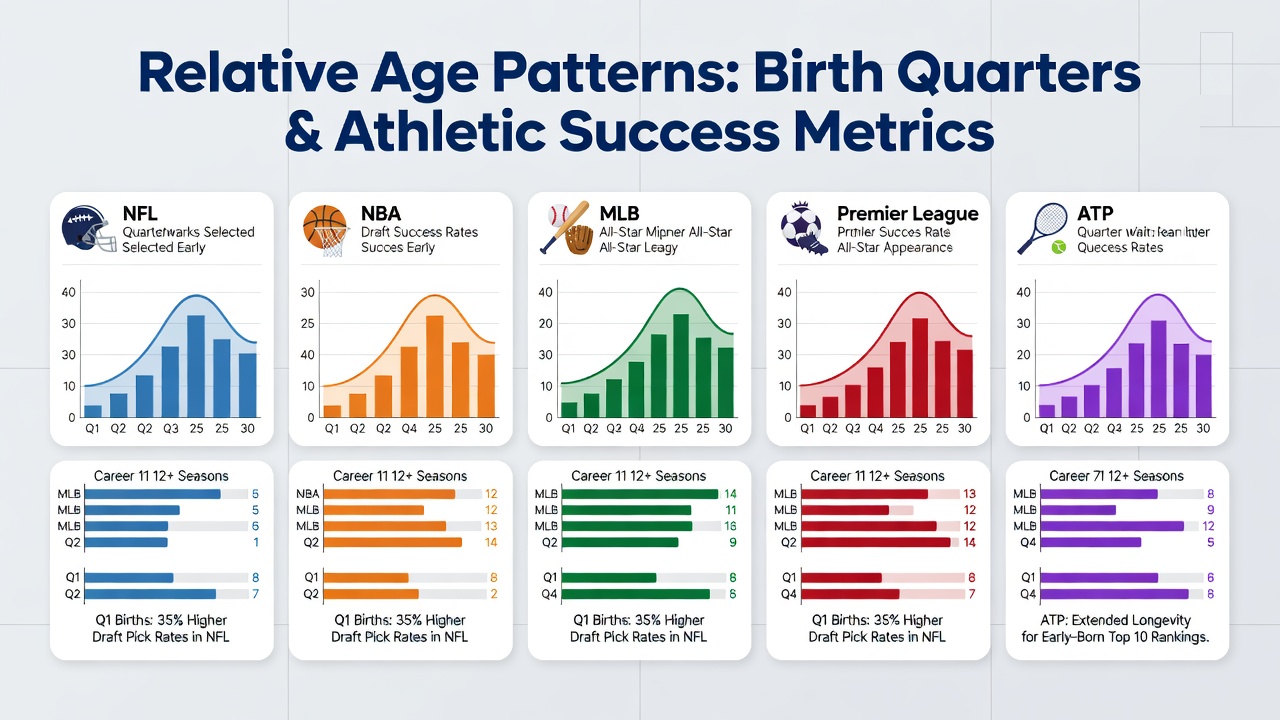
Relative Age Patterns Shape Draft Success, Peak Windows, and Longevity in Major Leagues
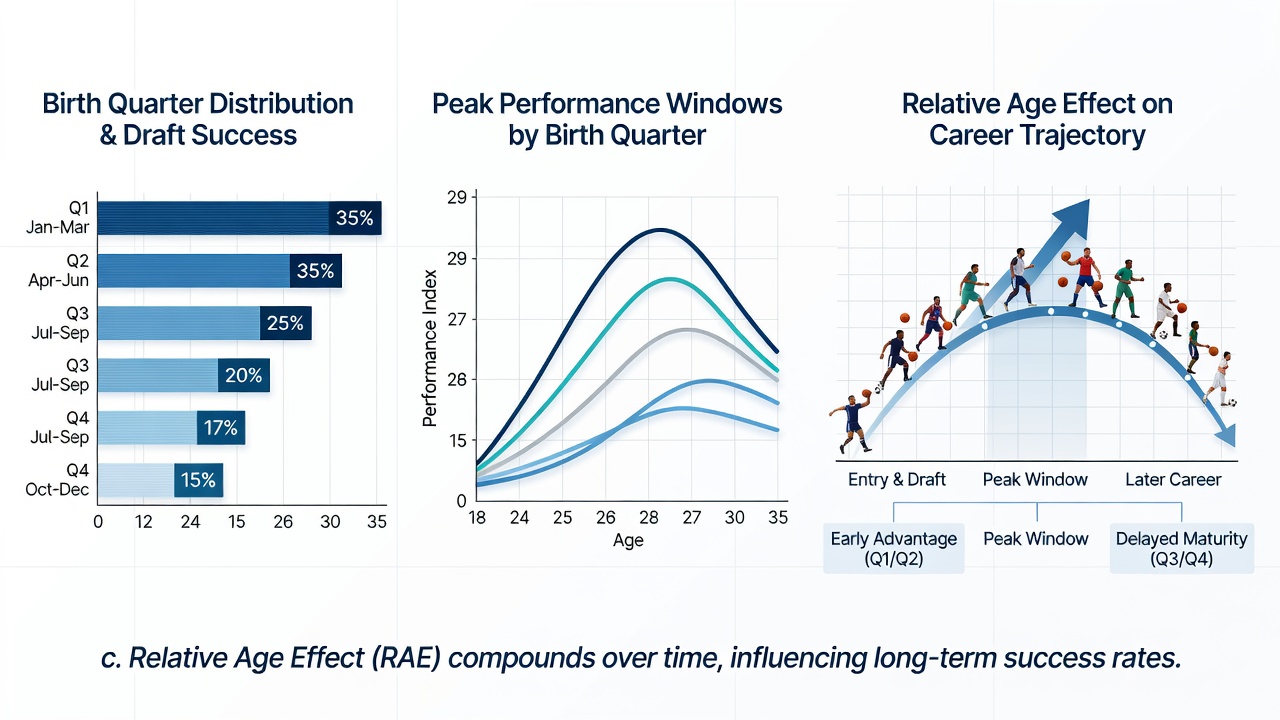
Birth quarter distributions reveal consistent patterns where athletes born in the first three months of the year appear more frequently in professional selections and rankings, and researchers trace these outcomes to youth age-group cutoffs that give older players within each cohort extra physical and developmental time. Data compiled across multiple leagues shows Q1 births often exceed 30 percent of rosters while Q4 births fall below 20 percent in many datasets, and these imbalances start early in junior systems before carrying forward into draft rooms and senior contracts.
NFL Draft Trends and Positional Longevity
NFL scouting records indicate that players born between January and March capture a disproportionate share of first-round selections, particularly at skill positions where early physical advantages translate into college production metrics that teams value during evaluations. Studies tracking career length find Q1 players maintain roster spots for an average of 0.8 seasons longer than Q4 counterparts when controlling for draft round, while peak statistical seasons cluster between ages 26 and 29 for most birth quarters yet show slight extensions for earlier-born athletes in offensive line roles. Observers note that the league's September 1 cutoff reinforces the same quarterly skew seen in high school and NCAA eligibility rules, and longitudinal data from multiple draft cycles confirm the pattern holds across offensive and defensive units.
NBA Roster Composition and Performance Peaks
NBA front offices select players with Q1 birth months at rates roughly 1.4 times higher than league-wide population expectations, and position-specific analyses show the effect strongest among frontcourt players who benefit from earlier size and strength development during AAU and high school seasons. Performance curves derived from player-tracking data place median peak efficiency windows at 24-27 years old regardless of birth quarter, although Q1 athletes sustain above-average minutes per game into their early thirties at slightly higher rates according to season-by-season participation logs. International players entering the league add another layer because many federations use January 1 cutoffs that align with North American calendars and therefore amplify the same quarterly distribution already observed in domestic drafts.
MLB Lineup Construction and Career Durability
Baseball's August 31 cutoff produces a different quarterly profile than football or basketball, yet Q1 and Q2 births still dominate first-round draft picks and major-league opening-day rosters at rates exceeding 55 percent combined. Pitching staffs display the clearest separation, with earlier-born hurlers logging more innings before age 30 while later-born arms sometimes reach higher velocity peaks after additional physical maturation time. Longevity statistics compiled from 30-year player registers show Q4 position players retiring 1.2 seasons earlier on average than Q1 peers when matched for debut age, and these gaps widen when organizations emphasize early draft capital on players who already hold size and coordination edges from their birth timing.
Premier League Signings and On-Pitch Longevity
English Premier League academies operate under a September 1 cutoff that mirrors the NFL model, and scouting reports plus transfer records indicate Q1 players receive academy contracts at rates nearly double those of Q4 players within the same age cohorts. Once professionals, the advantage shifts toward sustained starting appearances rather than raw goal tallies, with Q1 midfielders and defenders averaging 12-15 additional league matches per five-year window compared with later-born teammates according to match-log databases. Transfer market valuations also reflect these patterns, because clubs pay premiums for earlier-born prospects who already demonstrate senior-level physical readiness during age-restricted tournaments.
ATP Rankings and Longevity on the Tour
Tennis uses a January 1 cutoff for junior events, and ranking distributions among top-100 ATP players show Q1 athletes holding approximately 34 percent of spots while Q4 athletes occupy roughly 18 percent across multi-year samples. Career-length analyses reveal that later-born players who break into the top 50 often extend their peak earning windows by one to two seasons because they reach physical maturity after the most intense junior competition phase has passed. Serve and movement data collected at major tournaments indicate quarterly differences in injury-related retirements, with Q4 players showing modestly higher rates of extended absences during the 28-32 age range when cumulative tour schedules intensify.
Cross-League Comparisons and Emerging Data
Comparative tables that align all five leagues on identical birth-quarter bins highlight the strongest relative-age skews in soccer and American football, while baseball and tennis display more moderate but still statistically significant imbalances. Researchers tracking athletes who compete across multiple sports note that those born in Q1 accumulate earlier high-level exposure, which in turn increases the probability they remain in elite pipelines long enough to reach professional contracts or ranking thresholds. As of June 2026, several major leagues continue to publish quarterly demographic breakdowns in annual reports, and these releases allow ongoing verification that the patterns remain stable even as academies experiment with bio-banding and adjusted age-group formats.
Conclusion
Birth-quarter data across the NFL, NBA, MLB, Premier League, and ATP rankings demonstrate measurable links between early-year births and elevated draft probabilities, extended peak performance intervals, and modestly longer professional careers, and these connections trace directly to age-cutoff policies established decades ago in youth competition structures. Continued collection of longitudinal statistics will clarify whether targeted interventions can narrow the gaps without altering competitive fairness at the senior level.