Shared motion patterns in rotational sports: comparing torque generation in golf swings, baseball pitches, and tennis serves using unified sensor technologies
Written by Rosa Klein · Aug 26, 2026
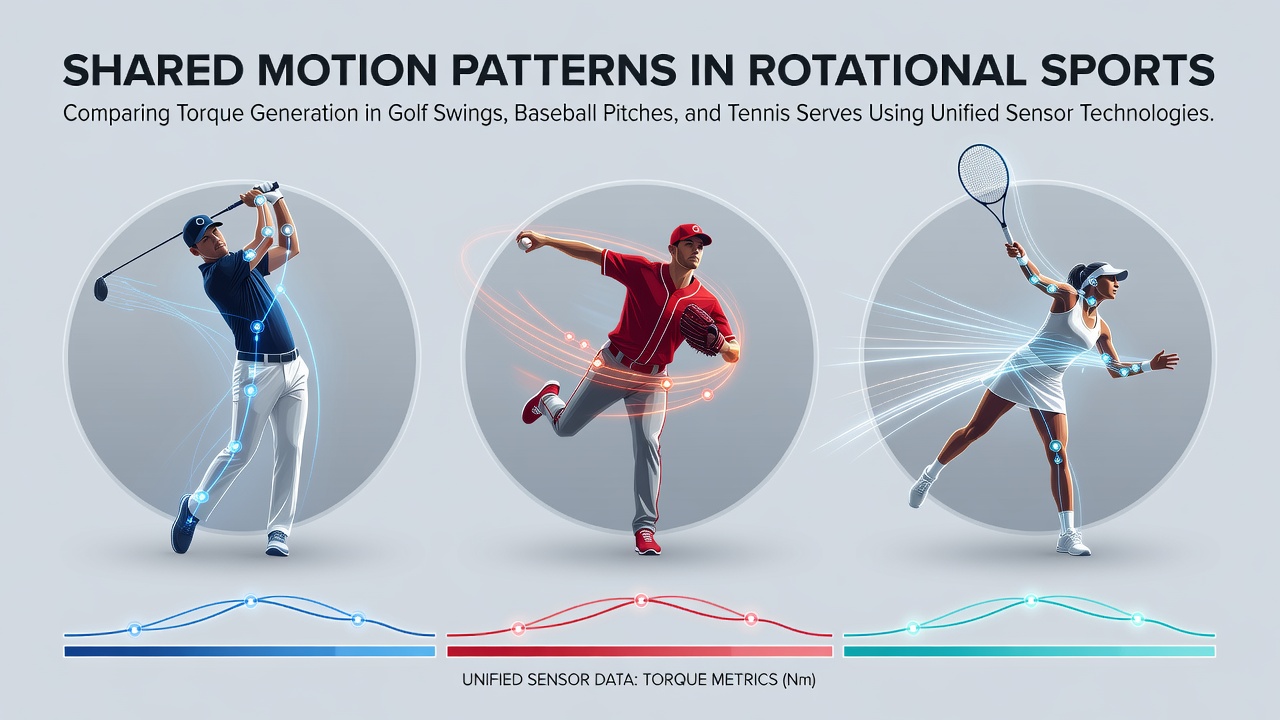
Shared motion patterns in rotational sports: comparing torque generation in golf swings, baseball pitches, and tennis serves using unified sensor technologies
Unified sensor technologies have enabled direct comparisons of torque generation across golf swings, baseball pitches, and tennis serves by capturing synchronized data from inertial measurement units, force plates, and electromyography systems placed at consistent anatomical landmarks. Researchers at multiple institutions have standardized protocols that track core rotation, hip-shoulder separation, and ground reaction forces, revealing overlapping kinematic sequences despite the distinct equipment and objectives in each sport. Data collected through August 2026 shows peak torque values occurring at similar phases of the kinetic chain in all three movements, particularly during the transition from backswing to acceleration.
Core Biomechanical Elements Captured by Sensors
Sensor arrays positioned at the pelvis, thorax, and upper extremities record angular velocities and moments that allow torque calculations in three planes, and these measurements highlight how athletes transfer energy from the lower body through the trunk to the implement. Studies using identical wearable units across disciplines indicate that maximum trunk rotation torque often precedes peak hand speed by 40 to 60 milliseconds in professional performers, creating a consistent temporal pattern regardless of sport. Force plate data further shows vertical and horizontal ground reaction forces correlating with torque output at the lumbar spine, with values normalized to body mass permitting cross-sport comparisons that account for differences in athlete size and stance width.
Application of Unified Sensor Systems
Investigators have deployed synchronized IMU clusters and optical motion capture alongside instrumented clubs, bats, and rackets to quantify internal and external rotation moments at the shoulder and elbow while maintaining consistent sampling rates above 200 hertz. One collaborative project coordinated by the University of Queensland integrated these technologies across training facilities in Australia and North America, producing datasets that align swing phases through event detection algorithms based on angular velocity thresholds. The approach eliminates discrepancies that previously arose when separate laboratories used different calibration methods or marker sets, and it has produced comparable torque curves for elite golfers, pitchers, and servers recorded under controlled conditions.
Comparative Torque Profiles Across the Three Sports
Peak trunk torque in golf swings reaches approximately 120 to 160 Newton-meters in professional male athletes during the downswing, whereas baseball pitchers generate comparable values slightly earlier relative to ball release due to the shorter overall movement time. Tennis serves produce trunk torques in a similar range, yet the timing shifts because the serve incorporates a pronounced leg drive and lateral flexion component that alters the sequence of peak moments at the thoracic spine. Sensor data reveal that hip-shoulder separation angles at the point of maximum torque average 45 to 55 degrees across all three actions, suggesting a shared mechanism for storing and releasing elastic energy in the oblique musculature.
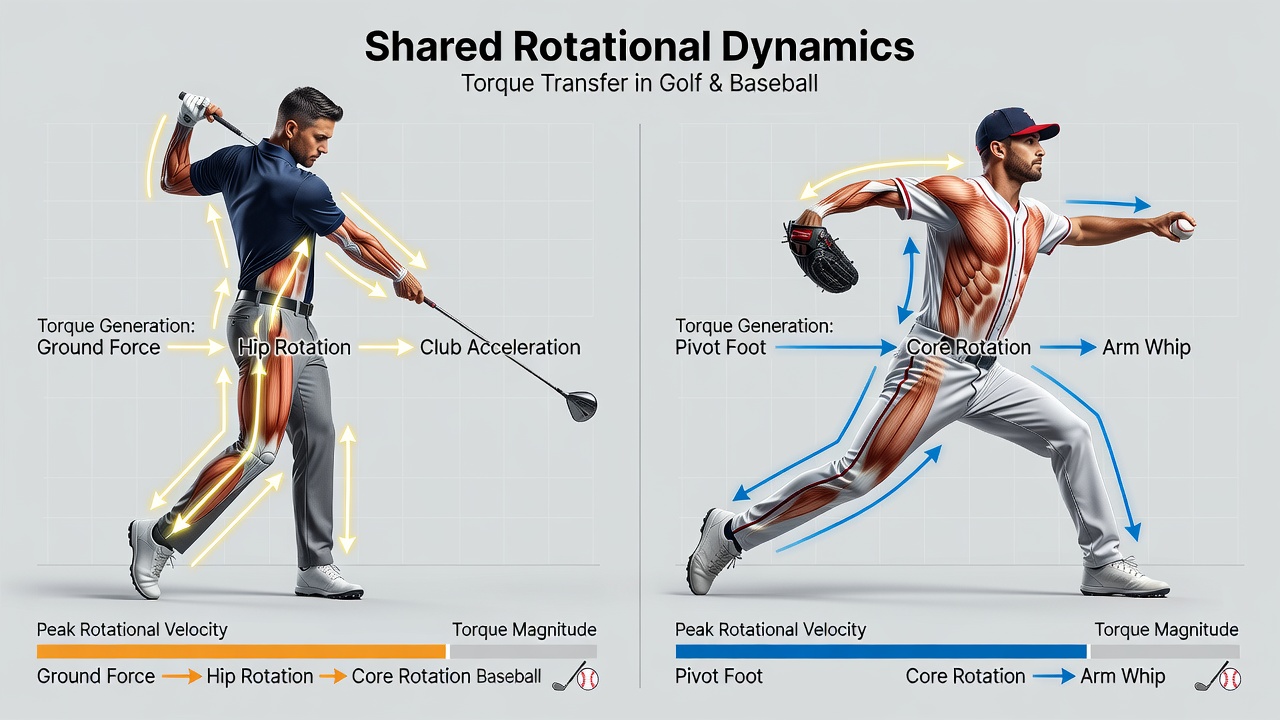
Ground reaction force patterns also demonstrate consistency when normalized, with rear-foot push-off contributing 60 to 70 percent of the total vertical impulse before front-foot braking initiates the rotational acceleration phase. Observers note that elite performers in each sport exhibit reduced variability in these force-torque relationships during repeated trials, and longitudinal tracking through unified systems has documented how small changes in foot placement alter peak torque timing by as little as 10 milliseconds. Research from the University of Freiburg Institute of Sport and Sport Science has confirmed these timing relationships hold across right-handed and left-handed athletes when coordinate systems are mirrored appropriately.
Training and Performance Implications from Sensor Findings
Coaches now use real-time torque feedback derived from portable sensor kits to adjust athlete positioning during practice sessions, and the unified datasets allow direct transfer of drills between sports when similar torque deficits appear. For instance, pitchers exhibiting delayed trunk rotation relative to hip drive receive modified medicine-ball rotational throws originally developed for tennis players, while golfers showing excessive lateral sway adopt stride-length adjustments drawn from pitching mechanics. These cross-disciplinary applications rest on the quantitative overlap documented by the shared sensor protocols rather than anecdotal observation.
Conclusion
Unified sensor technologies continue to map shared motion patterns by providing standardized torque measurements across golf, baseball, and tennis, and the resulting datasets support evidence-based technique refinements that respect the unique constraints of each sport while exploiting common biomechanical principles. Ongoing collection through 2026 and beyond will likely refine these comparisons further as sensor resolution and athlete sample sizes increase.