Surface Composition Shifts: How Artificial Turf and Natural Grass Alter Sprint Bursts, Ball Trajectories, and Endurance Metrics Across NFL, Soccer, and MLB Venues
Written by Finley Butler · Aug 23, 2026
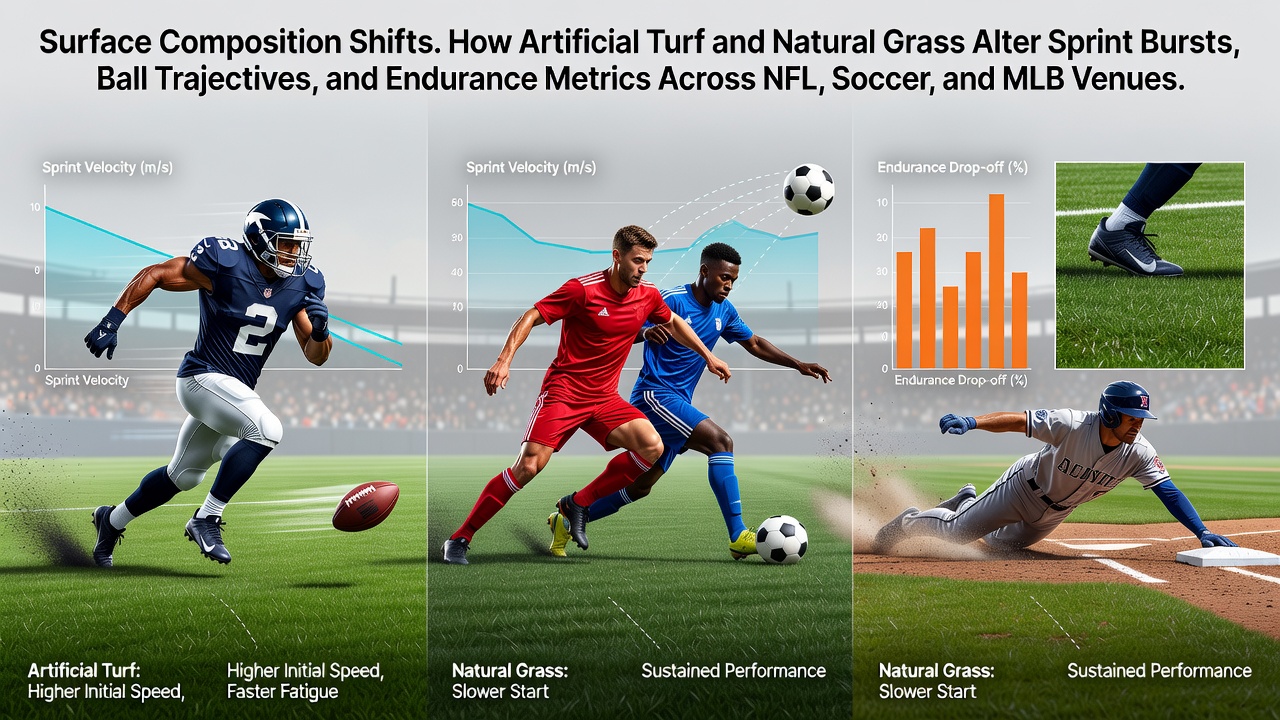
Surface Composition Shifts: How Artificial Turf and Natural Grass Alter Sprint Bursts, Ball Trajectories, and Endurance Metrics Across NFL, Soccer, and MLB Venues
Artificial turf and natural grass create distinct physical environments that reshape how athletes generate speed, control ball movement, and sustain effort through full games, and data from multiple leagues document measurable differences in sprint performance, trajectory behavior, and fatigue accumulation. Researchers tracking elite competition note that surface hardness, friction coefficients, and energy return rates vary systematically between the two materials, which in turn influences stride mechanics and ball roll characteristics across NFL stadiums, soccer pitches, and MLB fields.
NFL Field Surface Effects on Acceleration and Recovery
League records indicate that teams playing on artificial turf post slightly higher average sprint speeds during the first three quarters compared with grass venues, because the synthetic fibers deliver more consistent energy return underfoot while reducing the slight sink that occurs on natural surfaces. Studies compiled by the NCAA sports science division show that this advantage narrows in the fourth quarter, when accumulated impact forces on harder turf correlate with modest declines in repeated-sprint ability. Ball carriers experience quicker initial bursts on turf, yet the same surface increases peak ground reaction forces, which can elevate metabolic cost over the course of 60-plus snaps.
Soccer Pitch Variations and Ball Behavior
Soccer governing bodies have tracked how artificial surfaces produce higher and more predictable bounce heights than well-maintained grass, altering passing angles and first-touch requirements for midfielders. FIFA quality programme data reveal that ball roll distance on approved artificial turf remains stable across temperature ranges, whereas natural grass slows measurably when moisture content rises after rainfall. Wing players therefore adjust their sprint trajectories earlier on grass to compensate for reduced ball speed, while central defenders cover marginally greater distances on artificial pitches because the ball travels farther before stopping. Endurance metrics collected across European and South American leagues further show that total high-intensity running distance drops approximately 4 to 6 percent when matches shift from grass to turf during summer months, reflecting the increased surface temperature and reduced shock absorption.
MLB Outfield and Infield Dynamics
MLB tracking systems record that ground-ball velocities increase on artificial turf because the surface offers less friction than grass, allowing balls to reach outfielders more quickly and altering defensive positioning. Pitchers and catchers note that home-plate dirt mixtures interact with adjacent turf or grass transitions to change footing stability during delivery, which can affect release-point consistency over long innings. League-wide stamina data indicate that position players log slightly higher average sprint distances per game on grass fields, yet the difference narrows when teams install hybrid grass systems that combine natural roots with synthetic reinforcement. Observers note that these hybrid surfaces reduce the typical endurance gap while preserving the lower bounce profiles characteristic of traditional grass.
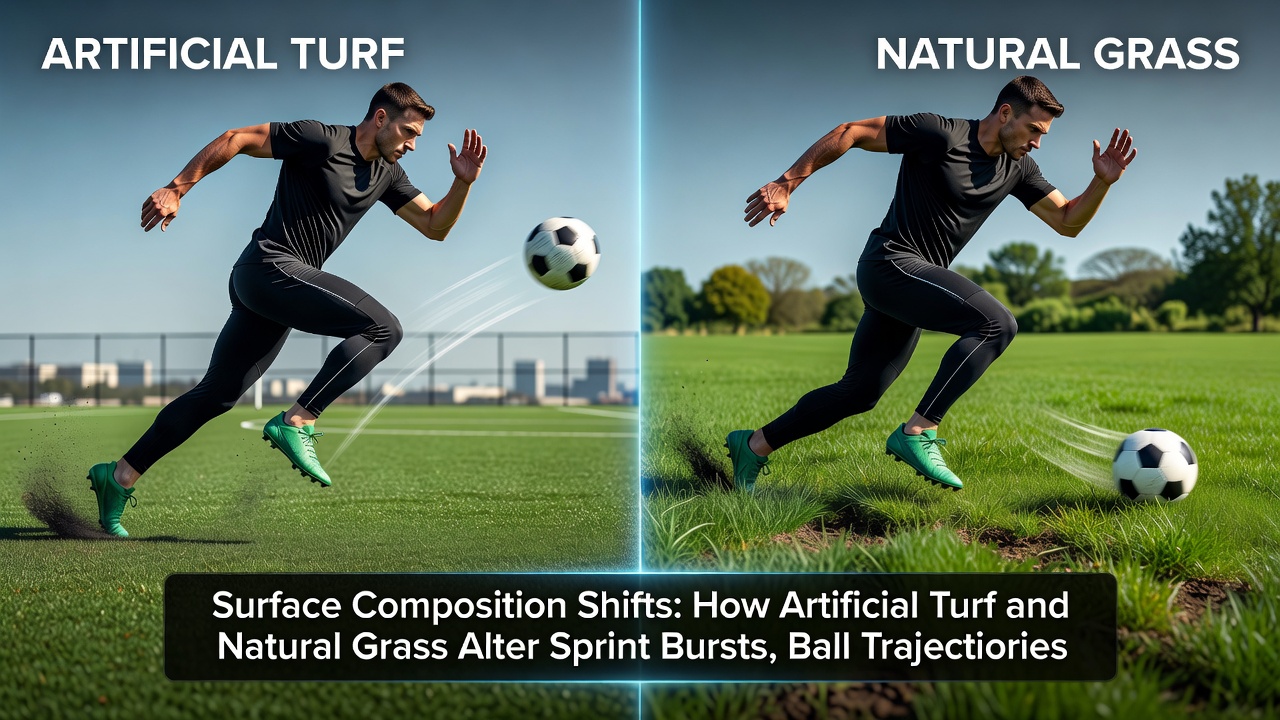
Cross-League Endurance Patterns
Comparative analyses from university research groups in Canada and Australia demonstrate that cumulative ground-reaction forces rise faster on artificial surfaces across all three sports, prompting earlier recruitment of stabilizing muscle groups and accelerating glycogen depletion. NFL players, soccer midfielders, and MLB outfielders each exhibit elevated heart-rate recovery times after repeated high-speed efforts on turf, although the magnitude differs by sport because of varying match durations and substitution rules. Data collected during the 2025 season and carried forward into August 2026 preparations show that teams rotating between surface types adjust their weekly training loads to offset the added metabolic demand, particularly when multiple away games occur on artificial fields within a short window.
Ball-trajectory studies further highlight that spin rates on thrown and struck objects remain largely unchanged, yet the interaction between ball and surface produces different friction losses that affect final placement. Outfielders in MLB therefore read hops differently on each surface, while soccer goalkeepers anticipate higher rebounds off artificial turf during set pieces. These documented shifts prompt coaching staffs to incorporate surface-specific drills that refine footwork timing and visual cues without altering core technique.
Conclusion
Performance databases across the NFL, major soccer leagues, and MLB confirm that surface composition directly modulates sprint output, ball movement, and endurance profiles through measurable differences in friction, hardness, and energy return. Teams and governing bodies continue to refine hybrid solutions and maintenance protocols to balance consistency with player welfare, while ongoing sensor data collection supports more precise load-management strategies as schedules evolve into future seasons.