Surface Materials Reshaping Ball Trajectories and Movement Efficiency in Professional Competitions Across Multiple Disciplines
Written by Rosa Klein · Aug 19, 2026
Surface Materials Reshaping Ball Trajectories and Movement Efficiency in Professional Competitions Across Multiple Disciplines
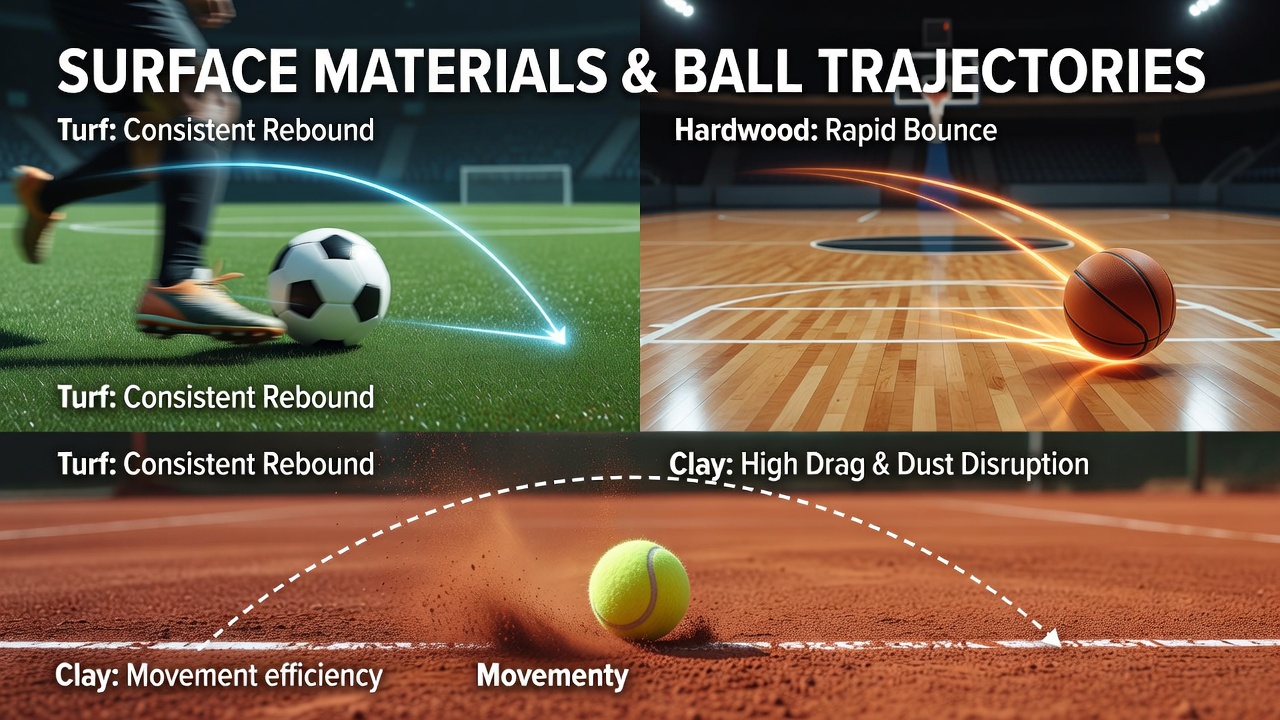
Professional athletes across disciplines encounter surfaces that directly alter how balls travel and how efficiently players move during competition, with material composition playing a central role in these dynamics. Grass fields, artificial turf, clay courts, hardwood floors, and synthetic tracks each produce measurable differences in friction, bounce height, and rolling resistance that show up in performance data from major leagues and tournaments. Researchers track these variables through high-speed cameras and sensor arrays, revealing consistent patterns that coaches and equipment designers incorporate into preparation strategies.
Artificial Turf Versus Natural Grass in Soccer and American Football
Artificial turf installations in soccer and American football venues create faster ball roll speeds compared to natural grass, particularly when the surface remains dry and the infill settles evenly. Data from league matches indicate that ground passes cover greater distances on turf before defenders intercept them, while players experience reduced traction during cutting movements that can increase energy expenditure over full matches. Natural grass surfaces, by contrast, absorb more impact energy and slow the ball during wet conditions, which alters passing networks and forces midfielders to adjust their positioning earlier in build-up play. Studies compiled by the Australian Institute of Sport document these differences through GPS tracking of elite athletes, showing that sprint distances and acceleration profiles shift measurably between the two surface types during equivalent game segments.
Clay, Grass, and Hard Courts in Professional Tennis
Tennis ball trajectories respond sharply to court surface materials, with clay courts producing higher and slower bounces that extend rally lengths and favor baseline players who construct points through topspin loops. Grass courts generate lower bounces and quicker forward movement, allowing serve-and-volley tactics to succeed more frequently because the ball skids through the court rather than kicking upward. Hard courts sit between these extremes, delivering consistent bounce heights that reward flat, penetrating shots while requiring players to cover greater lateral distances during extended exchanges. Tournament organizers schedule surface changes seasonally, and performance databases from the ATP and WTA record how individual players' win percentages vary across these materials in consecutive events.
Basketball Court Surfaces and Movement Patterns
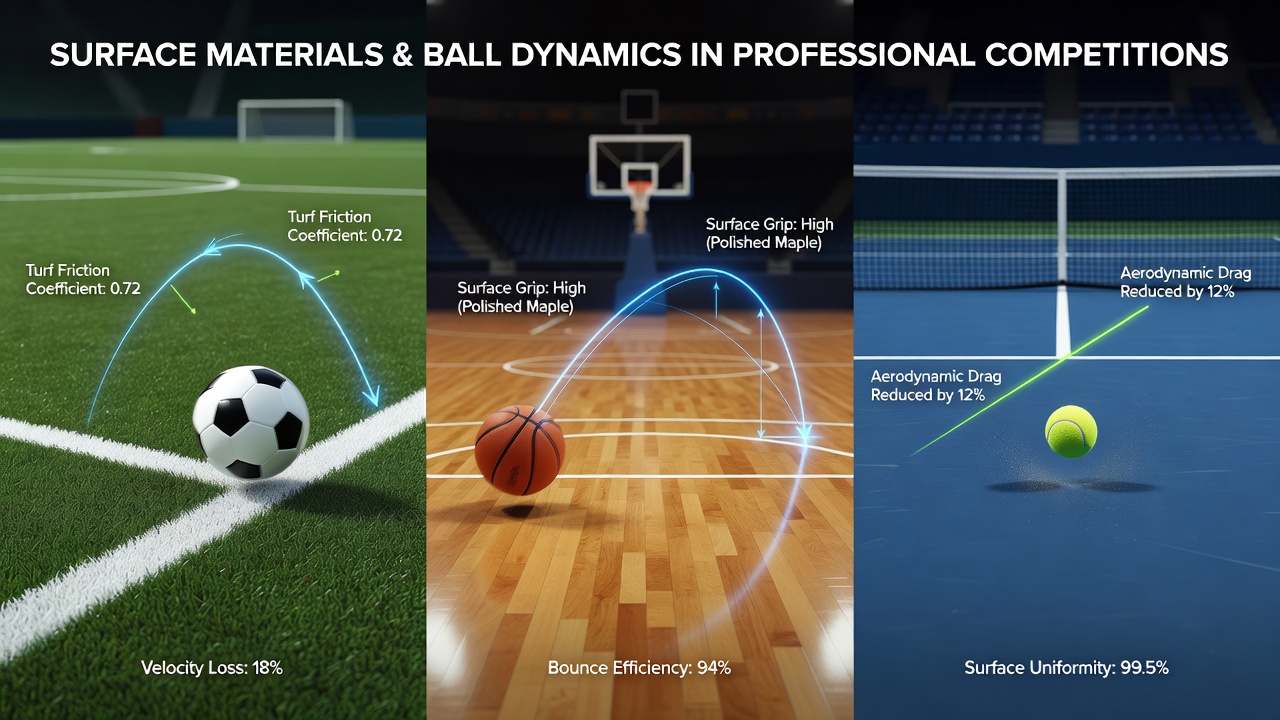
Hardwood basketball floors, typically maple with specific finishes, provide predictable friction levels that support rapid directional changes and vertical leaps without excessive slippage. When venues install synthetic or rubberized overlays for multi-purpose events, the altered coefficient of friction changes how quickly guards plant their feet for jump shots and how far the ball travels after bounces during dribble drives. League tracking systems capture these effects through optical sensors, showing that spacing systems expand or contract depending on the surface grip, which in turn influences three-point attempt volumes and assist distributions recorded during regular-season games. Observers note that teams traveling between venues with different floor treatments often adapt their warm-up routines to recalibrate footwork timing before tip-off.
Baseball Infields, Outfields, and Ground Ball Behavior
Baseball infield dirt mixtures and outfield grass heights directly control how ground balls accelerate or slow after contact with the bat, creating regional variations that visiting teams must account for during series. Softer infield dirt allows balls to dig in and stop sooner, favoring infielders who position closer to the plate, whereas harder packed surfaces produce sharper hops that increase error rates when defenders fail to adjust their glove angles. Outfield grass length affects how far fly balls carry before landing and how quickly outfielders can charge and throw back to the infield, data that front offices review when evaluating player performance across stadiums with different maintenance standards. Research from Canadian university sports science programs has quantified these variables using radar and video analysis during MLB games, confirming that batted-ball exit velocities interact with surface conditions to produce predictable landing zones.
Cross-Discipline Training Adaptations and Equipment Responses
Athletes and support staff respond to surface variability by modifying training drills and selecting footwear with specific cleat patterns or sole materials that match upcoming competition venues. Soccer players scheduled for turf matches increase emphasis on lateral strength work, while tennis competitors practice on multiple court types during preparation blocks to maintain timing on serves and groundstrokes. Equipment manufacturers adjust ball constructions, such as seam height in baseballs or felt density in tennis balls, to maintain consistent performance across surfaces, and governing bodies publish specifications that standardize these elements within each sport. Performance analysts compile season-long datasets that reveal how these adaptations translate into efficiency gains, particularly during condensed schedules where teams or individuals compete on successive days across different materials.
Conclusion
Surface materials continue to shape ball trajectories and movement efficiency in measurable ways across professional competitions, with data from multiple sports confirming the influence of friction, bounce, and rolling resistance on tactical decisions and physical output. Organizations track these factors through integrated sensor systems and adjust preparation accordingly, while researchers maintain ongoing studies that refine understanding of how athletes optimize performance on each surface type. As venues evolve their installations and equipment standards update, the interplay between materials and results remains a documented element of elite sport analysis.