Tracing Career Longevity Patterns Among Elite Competitors in Contact-Heavy and Precision-Based Disciplines
Written by Rosa Klein · Aug 16, 2026
Tracing Career Longevity Patterns Among Elite Competitors in Contact-Heavy and Precision-Based Disciplines
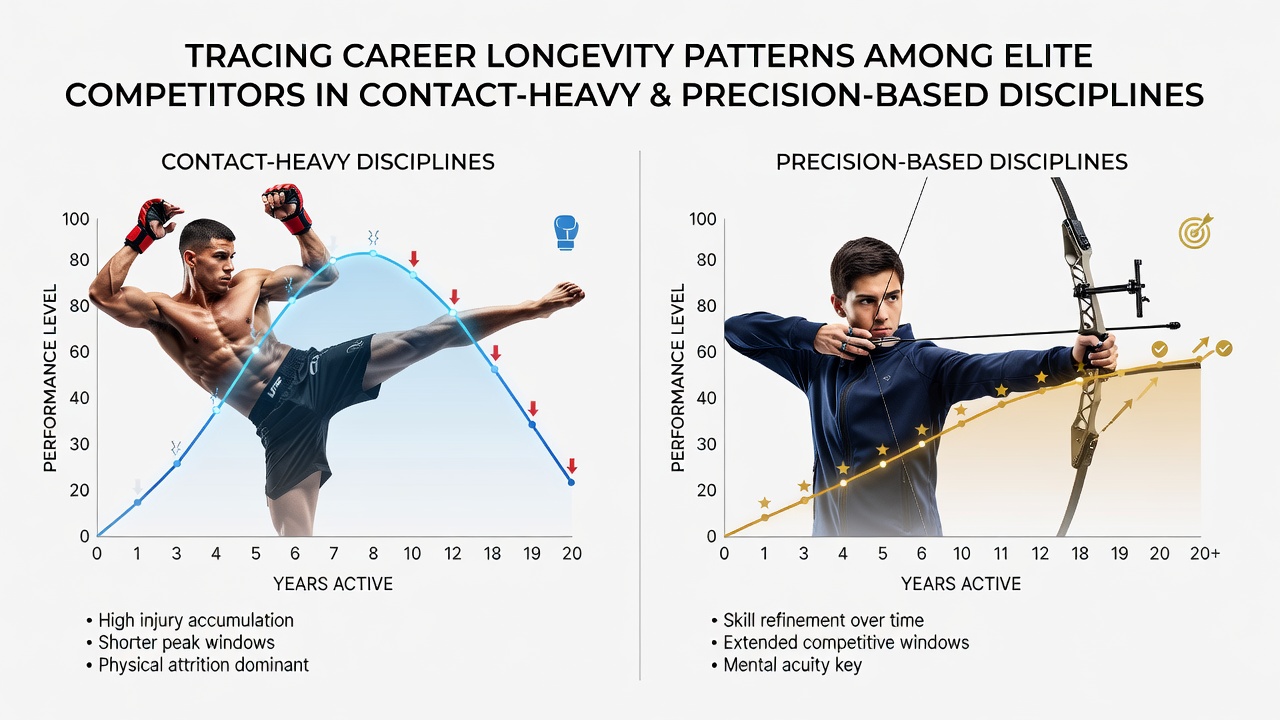
Elite sports reveal distinct career longevity patterns when researchers compare contact-heavy disciplines such as boxing, rugby, and American football with precision-based fields like archery, shooting, and golf, and longitudinal studies track these differences through retirement age data and performance metrics spanning multiple decades. Contact-heavy athletes often experience shorter careers due to cumulative physical trauma while precision competitors maintain competitive edges into later years because repetitive strain remains lower and technical skills endure longer. Data compiled by the Australian Sports Commission shows average career durations in contact sports hover around eight to twelve years for top professionals whereas precision athletes frequently extend their spans to fifteen or twenty years depending on the event type.
Contact-Heavy Disciplines and Physical Toll Factors
Boxers and rugby players face repeated high-impact collisions that accelerate joint degeneration and neurological risks so their prime performance windows cluster between ages twenty-two and thirty-two before injury accumulation forces exits or reduced roles. American football linemen and linebackers exhibit similar trajectories with league records indicating retirement peaks around thirty years old as concussions and orthopedic issues compound over seasons. Researchers at the Canadian Academy of Sport and Exercise Medicine documented that contact athletes undergo surgical interventions at rates three times higher than precision counterparts which directly correlates with earlier career terminations and transitions into coaching or media roles.
Yet some athletes extend longevity through advanced recovery protocols and position changes that minimize exposure and training regimens now incorporate load management technologies to monitor cumulative stress. In August 2026 updated injury surveillance reports from professional leagues confirmed modest gains in median career length for contact athletes who adopted these methods early in their development cycles.
Precision-Based Disciplines and Sustained Performance
Archers, shooters, and golfers rely on consistent technique and mental focus rather than explosive power so their careers often stretch well into the forties and sometimes fifties when visual acuity and steady hands remain intact. Data from international shooting federations reveal that medalists at world championships average thirty-eight years old compared with twenty-eight in contact combat events and many continue competing at elite levels because equipment adjustments compensate for minor physical declines. Observers note that precision athletes benefit from lower cardiovascular demands which preserve recovery capacity and allow extended training consistency without the same risk of acute breakdowns.
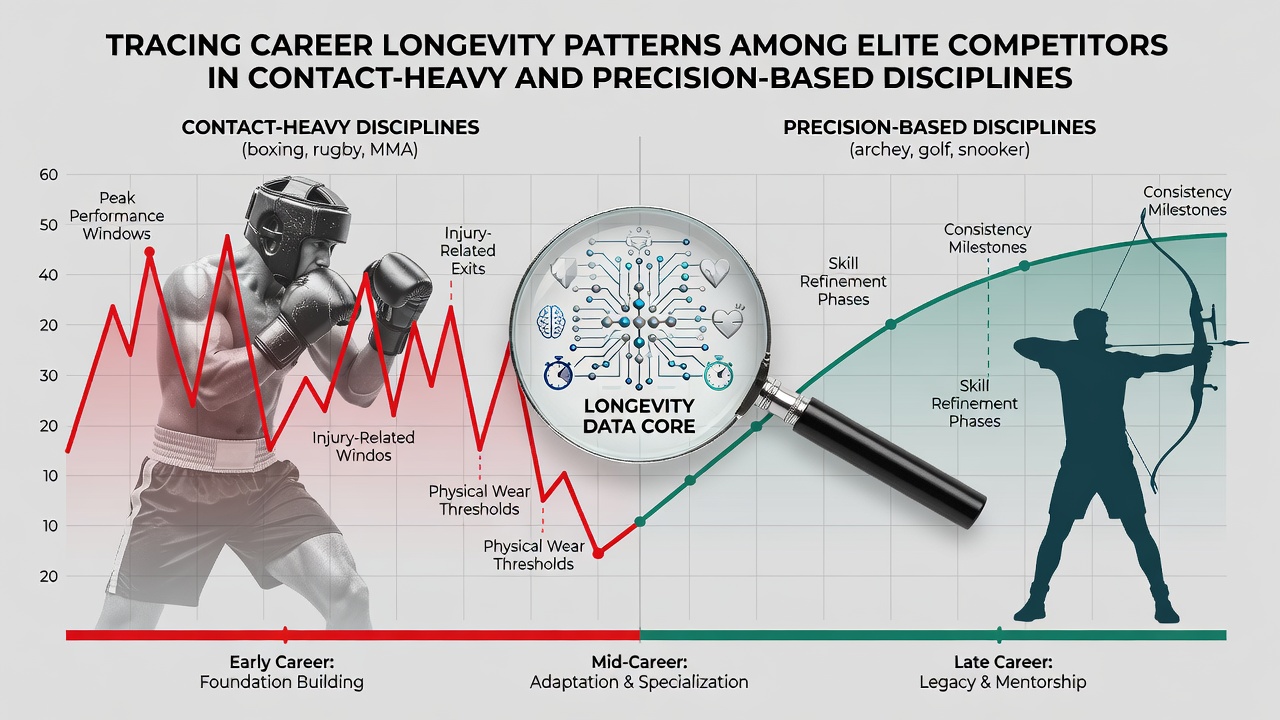
Studies published in the European Journal of Sport Science highlight how cognitive training and biomechanical analysis extend peak performance windows in these fields and athletes who integrate mental conditioning programs show delayed declines in accuracy scores after age forty. Those who've studied this pattern find that precision disciplines reward experience accumulation so veterans often outperform younger entrants once technical mastery solidifies.
Comparative Patterns and Influencing Variables
When analysts overlay datasets from both categories clear divergences emerge in retirement drivers with contact sports dominated by injury-related exits and precision fields shaped more by motivation or external commitments. Cross-sport comparisons indicate that athletes transitioning from contact to precision activities sometimes achieve hybrid longevity records although such moves remain rare due to skill specificity requirements. Environmental factors including training surface quality and access to specialized medical support further modulate outcomes across regions and governing bodies continue refining safety standards to address these variables.
What's interesting is how socioeconomic elements intersect with physical ones because athletes in well-resourced programs access better rehabilitation and nutrition which lengthens careers regardless of discipline type. Figures from global sports medicine databases show narrowing gaps in longevity between contact and precision groups as technology adoption spreads and monitoring tools become standard across federations.
Recent Trends Through 2026
As of August 2026 performance tracking platforms reveal incremental shifts where contact-heavy athletes extend participation by one to two seasons on average through targeted interventions and precision competitors maintain dominance in age-group records at international meets. These developments stem from collaborative research between leagues and academic institutions that emphasize proactive health management over reactive treatment and ongoing data collection continues to refine predictive models for career endpoints.
Conclusion
Patterns in career longevity between contact-heavy and precision-based disciplines rest on measurable differences in physical demands and recovery dynamics with contact athletes facing earlier exits from trauma accumulation while precision specialists leverage enduring technical proficiency for extended spans. Continued advancements in monitoring and support systems suggest gradual convergence in these trajectories as both categories adopt evidence-based approaches to athlete welfare.