Training Ground Transfers: Borrowed Drills from Combat Sports Enhancing Footwork Precision for Field Position Players and Court Athletes in Team Competitions
Written by Henrik Lang · May 27, 2026
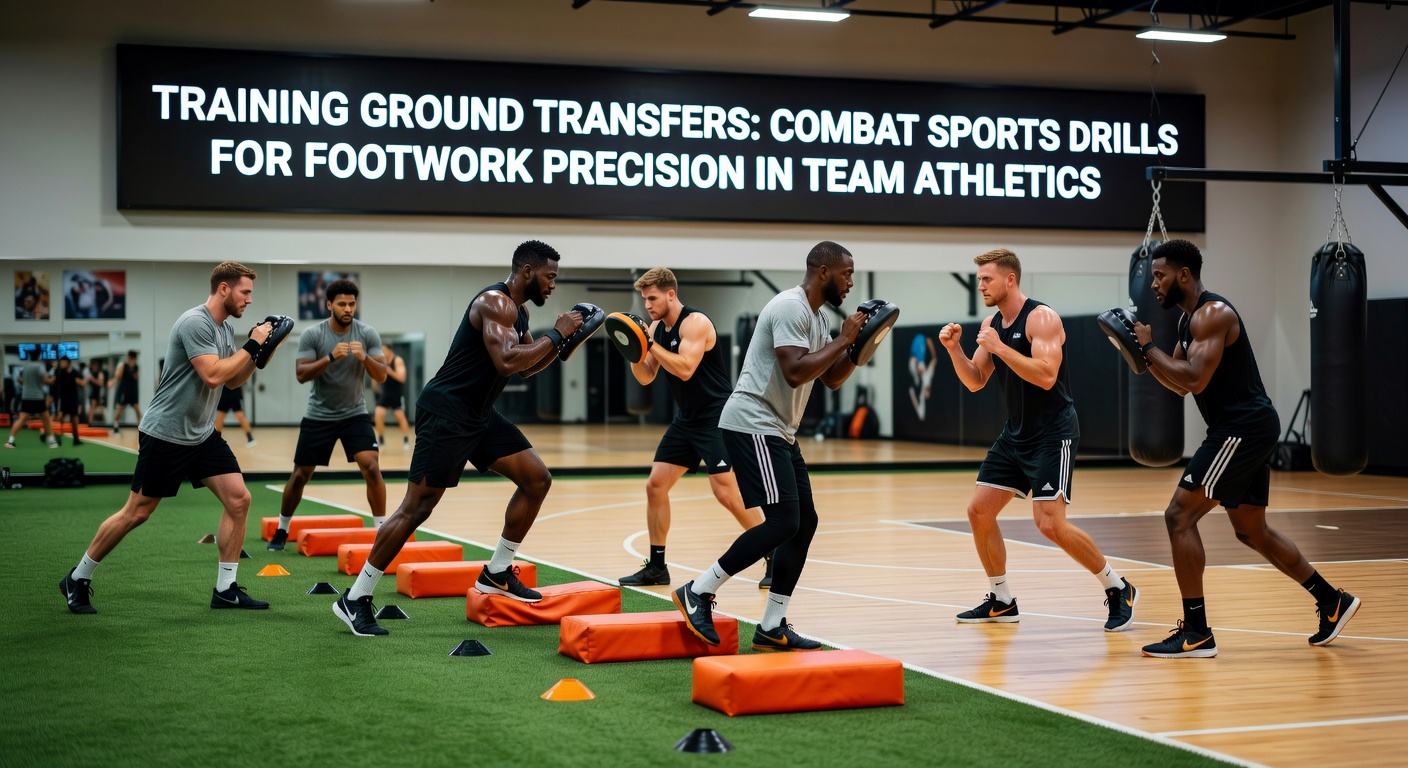
Training Ground Transfers: Borrowed Drills from Combat Sports Enhancing Footwork Precision for Field Position Players and Court Athletes in Team Competitions
Coaches across soccer, basketball, and American football have integrated movement patterns drawn from boxing, wrestling, and mixed martial arts into regular practice routines, and these adaptations focus on improving lateral quickness along with directional changes that matter during game situations. Data from performance tracking systems used by professional clubs shows measurable gains in change-of-direction speed after athletes complete six-week cycles of borrowed combat drills, while researchers at the Australian Institute of Sport documented similar improvements among court athletes who added shadow-boxing sequences to their warm-ups.
Field position players in soccer often spend portions of training replicating the stance and weight-shift mechanics seen in boxing footwork circles, because those patterns train the hips to stay low during side-to-side transitions that occur when marking opponents or closing passing lanes. Basketball guards and wings meanwhile incorporate wrestling-style sprawl recoveries into defensive slide drills, creating a continuous loop of low-to-high movements that mirror the demands of recovering after a blocked shot or contesting a drive. Observers note that these cross-sport transfers emerged more consistently after 2023, when several European and North American academies began sharing video libraries of their modified sessions.
Core Movement Patterns Adopted from Combat Disciplines
Boxing coaches emphasize the “step-drag” and “pivot-step” actions that allow fighters to maintain balance while shifting angles, and team-sport practitioners have translated those actions into ladder and cone sequences performed at varying tempos. Wrestling contributes “level-change” entries followed by immediate lateral pushes, which help defensive linemen and soccer center-backs maintain leverage when opponents attempt to drive past them. Mixed martial arts gyms frequently drill “fight-stance switches” that require rapid alternation between orthodox and southpaw bases, and basketball development staff have adapted the same switches into transition defense rotations so players can adjust their base without losing ground.
Studies published in the Journal of Strength and Conditioning Research during 2024 examined collegiate athletes who replaced traditional agility ladders with combat-derived patterns three times weekly, and the participants recorded reductions in 5-10-5 shuttle times ranging from 0.15 to 0.28 seconds. Those figures align with internal reports released by clubs in the English Premier League and the NBA G League that track similar metrics through wearable sensors.
Implementation Across Different Team Environments
During May 2026 preseason camps, several Major League Soccer teams scheduled dedicated “combat modules” on Mondays and Thursdays, slotting them between tactical possession work and set-piece rehearsals so players could apply the sharpened footwork immediately in small-sided games. NCAA Division I basketball programs followed comparable schedules, inserting 12-minute blocks of MMA-inspired stance switches before full-court scrimmages. The timing allows neuromuscular systems to stay primed while the athletes move into sport-specific decision-making tasks.
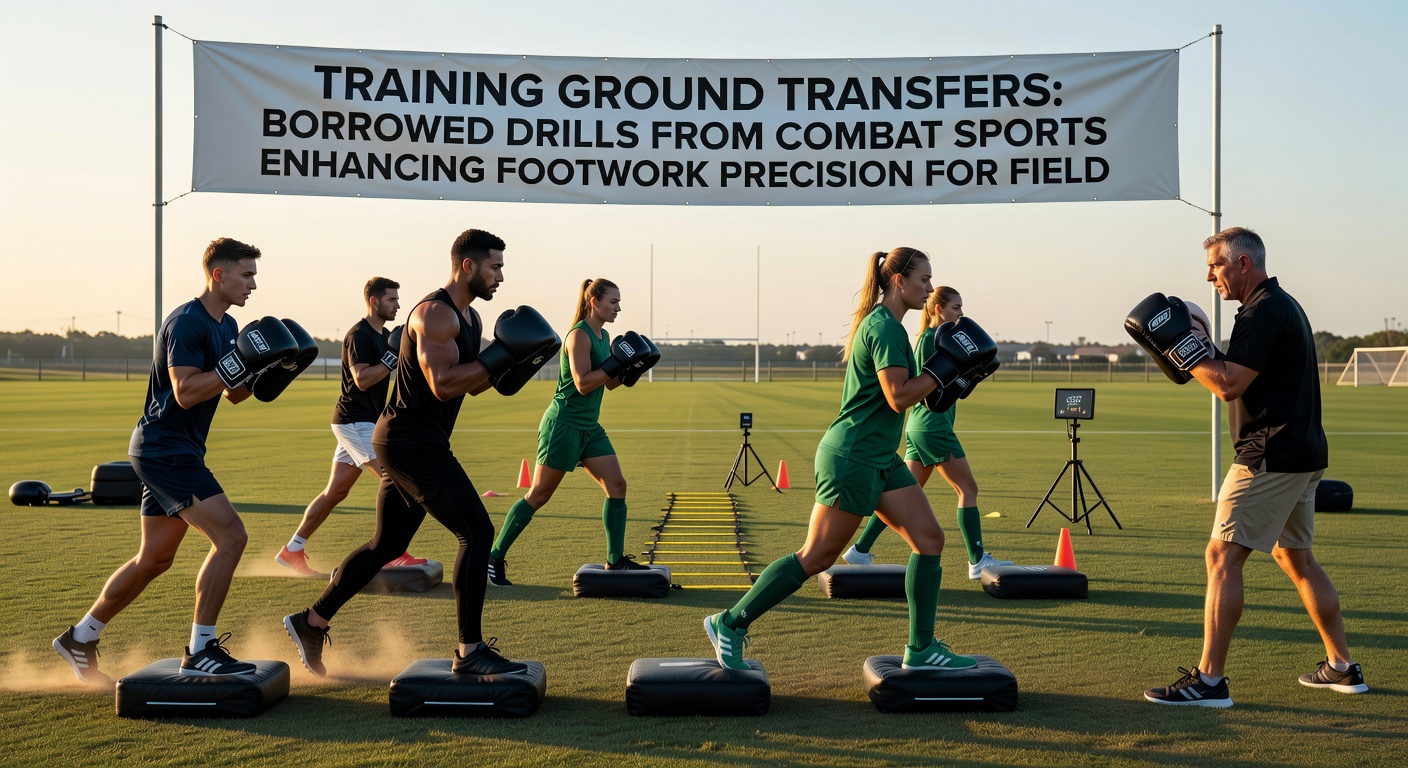
Strength and conditioning staffs coordinate these sessions with medical departments to monitor joint loading, because the deeper knee flexion common in wrestling entries increases stress on the patellar tendon if volume is not managed. European clubs have begun using force-plate assessments twice weekly to adjust drill intensity, whereas North American programs rely more on subjective readiness questionnaires paired with GPS workload data.
Measurable Outcomes and Tracking Methods
Performance analysts track metrics such as “explosive step count” and “recovery steps per possession” through optical tracking systems installed in training facilities, and the numbers indicate that athletes who consistently perform the borrowed drills produce fewer recovery steps when closing down opponents. In one dataset shared by a Bundesliga club, midfielders reduced their average recovery steps from 3.8 to 2.9 per high-intensity duel after an eight-week integration period. Similar patterns appear in basketball, where tracking data from SportVU cameras shows guards who trained with boxing pivots recorded higher “close-out efficiency” ratings during the 2025-26 season.
Academic partners at institutions including the University of Calgary have collaborated on longitudinal projects that follow athletes across multiple seasons, and preliminary findings released in early 2026 suggest sustained improvements in reactive agility test scores without corresponding increases in soft-tissue injury rates when proper progression protocols are followed.
Conclusion
Training environments continue to blend elements from combat sports into team-sport preparation because the underlying movement demands overlap in measurable ways, and the data collected through modern tracking tools supports the continued refinement of these borrowed drills. Clubs and programs that maintain structured integration alongside load-management practices report consistent gains in footwork precision across field and court settings.