Wind Speed Variations and Their Documented Effects on Trajectory Control for Thrown Objects in Baseball and Served Balls in Tennis Matches at Coastal Venues
Written by Henrik Lang · Jun 7, 2026
Wind Speed Variations and Their Documented Effects on Trajectory Control for Thrown Objects in Baseball and Served Balls in Tennis Matches at Coastal Venues
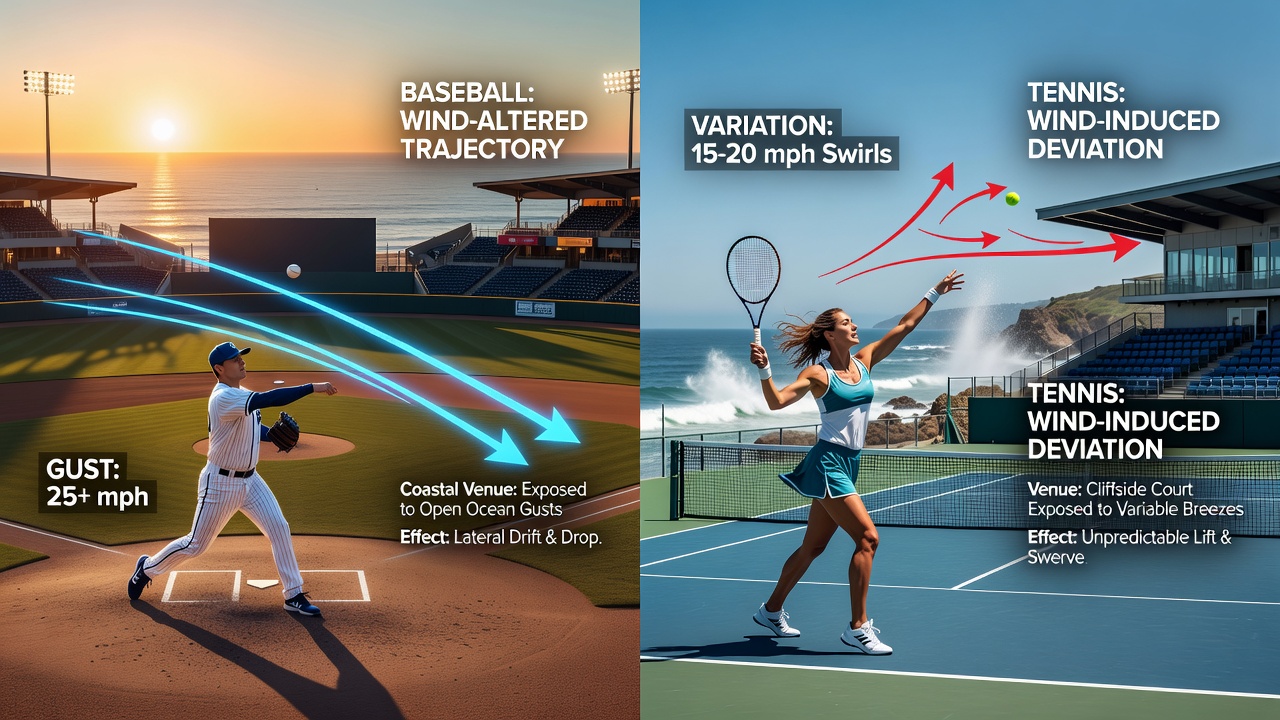
Coastal sports venues experience consistent wind patterns that alter the paths of baseballs and tennis balls in measurable ways, and researchers have tracked these changes through high-speed cameras and sensor data at multiple sites. Wind speed variations influence drag forces and lateral movement because balls traveling through air encounter resistance that scales with velocity squared, while crosswinds add perpendicular components that shift final positions by several centimeters or more depending on the gust duration.
Physics of Wind Interaction with Spinning Projectiles
Baseballs and tennis balls both carry spin that generates Magnus forces, yet wind modifies these effects by changing the relative airflow around the seams or fuzzy surface, and studies show that a 10 km/h crosswind can displace a pitched baseball by up to 15 cm at home plate when the pitch travels at typical major-league speeds. Observers note that higher wind speeds amplify turbulence around the ball, which reduces the predictability of break angles on curveballs and sliders, while tailwinds slightly decrease effective drag and allow faster arrival times at the target zone.
Researchers have measured similar patterns in tennis serves where topspin and slice shots respond differently to headwinds or gusts because the ball's lower mass makes it more susceptible to rapid directional changes, and data collected at outdoor coastal courts indicate that serve placement accuracy drops when sustained winds exceed 20 km/h. The interaction becomes more complex during variable gusts that occur near shorelines, where thermal differences between land and water create localized updrafts and downdrafts that further complicate trajectory calculations for both sports.
Baseball Applications at Coastal Stadiums
Stadiums situated along coastlines, such as those in San Francisco and San Diego, record frequent afternoon sea breezes that reach peak speeds between 15 and 30 km/h during summer months, and these conditions alter the flight of fastballs and breaking pitches in documented ways. Pitchers adjust release angles and grip pressures to compensate, while tracking systems capture how a 5 km/h increase in crosswind correlates with a measurable rise in wild pitches and passed balls during evening games. Data from multiple seasons reveal that left-handed pitchers often face greater challenges with outside breaking balls because the wind pushes the ball farther off the plate toward right-handed batters.
One analysis of Oracle Park games showed that wind speeds above 25 km/h from the bay direction increased the percentage of fly balls carrying into the outfield by roughly 8 percent compared with calm conditions, while ground-ball trajectories remained relatively stable. Teams have adapted defensive positioning accordingly, shifting outfielders laterally based on real-time wind readings collected from sensors mounted along the foul lines. These adjustments reflect patterns observed across several coastal venues where wind direction shifts from morning offshore flows to stronger onshore gusts by afternoon.
Tennis Serve and Ball Flight Dynamics at Coastal Events
Coastal tennis tournaments held in locations such as Miami and coastal Australian venues experience comparable wind influences, particularly during serve-and-volley exchanges where the ball travels at speeds exceeding 200 km/h. Research indicates that crosswinds of 15 km/h or greater cause the ball to deviate laterally by 10 to 20 cm before it reaches the service box, and players often widen their stance or alter toss heights to maintain control. Second serves with heavy kick spin show reduced effectiveness under tailwind conditions because the Magnus force interacts differently with the altered airflow, resulting in lower bounce heights than expected.
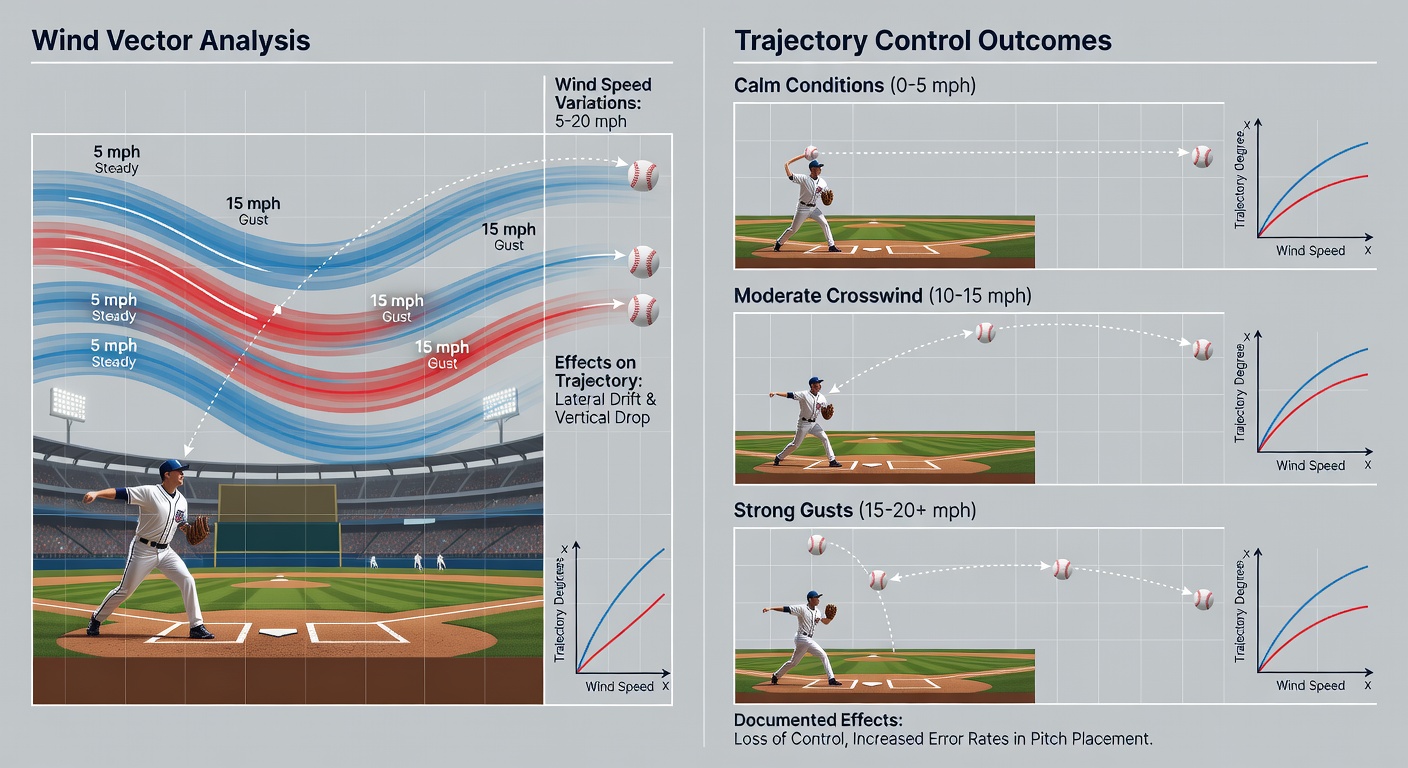
Match statistics compiled over multiple years at these sites demonstrate that unforced errors on serves increase when wind gusts exceed 25 km/h, especially during tiebreak situations where precision matters most. Ball manufacturers and tournament organizers have responded by adjusting ball pressurization standards slightly for high-wind periods, and players report that felt texture and seam orientation play larger roles in maintaining consistent flight paths. Data collected during June 2026 events at several coastal facilities continue to show these same correlations between wind speed thresholds and serve percentage declines.
Measurement Techniques and Venue-Specific Data
Modern tracking systems installed at professional venues capture wind speed at multiple heights above the playing surface, allowing analysts to correlate gust patterns with ball exit velocities and final landing coordinates. According to reports from the National Oceanic and Atmospheric Administration, coastal wind variability peaks during transitional weather fronts that pass through in spring and early summer, creating brief periods of elevated turbulence that affect both baseball and tennis simultaneously when events overlap in scheduling. European studies conducted near Mediterranean coastal courts have produced parallel findings, confirming that serve deviation scales linearly with wind speed up to approximately 35 km/h before nonlinear turbulence effects dominate.
Coaches and equipment managers review these datasets to prepare contingency plans, including changes to grip tape on tennis rackets or adjustments to baseball seam orientation for better wind resistance. Long-term records from venues in both North America and Australia indicate that average wind speeds have remained within historical ranges through 2026, although short-term gust frequency appears slightly higher during certain months. These measurements help officials decide whether to delay matches or reposition field equipment when conditions exceed established safety and fairness thresholds.
Conclusion
Documented interactions between wind speed and projectile trajectories continue to shape strategy at coastal baseball and tennis venues, with sensor data providing objective evidence of how crosswinds, gusts, and directional shifts alter outcomes in repeatable patterns. Players and support staff incorporate these measurements into preparation routines, while venue operators maintain monitoring systems that deliver real-time information during competitions. Continued collection of performance metrics alongside meteorological records supports ongoing refinements in equipment design and tactical adjustments across both sports.